.png?width=1500&height=398&name=CO_Corporate%20Logo%202021_4C_HOR_FNL-1%20(1).png)

Go-To-Market Cultural Alignment: The Invisible Variable in U.S. Expansion
Many companies that find success outside the United States have one thing in common: the need to succeed in the U.S. market.
That is not complicated or surprising. The United States is the largest economy in the world and, in many categories, the single biggest available market. World Bank data clearly shows the scale of the U.S. economy relative to most global markets. For companies in high-tech, scientific, medical, industrial, and systems integration sectors, the U.S. is not just attractive. It is strategic.
Company leaders want to grow. The U.S. is where they look. They are not wrong.
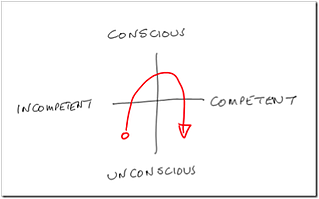
Situational Competence: A Requirement for International Management
Sat, Aug 6, 2011 — Small and mid-size businesses are becoming increasingly international. This means that CEOs who want to grow need to gain expertise in understanding employees and clients from different cultural backgrounds.

3 Top Sources of Strategic Marketing Insights
Mon, Jul 18, 2011 — Effective marketing strategies that drive significant results are almost always based on key insights. Insights can come from a lot of different places – from research, from a review of operations, from an analysis of the market, from a review of available data, from experience. The critical common element to game-changing insights is perspective – looking at the situation from a customer/prospect/market point of view. Let’s look at some examples: 1. Research-based Insight At Northeast Savings, we conducted a major customer segmentation study to better understand the needs of our consumers. One of the key findings of the research was a hierarchy of concerns expressed by a key constituency – 50+ consumers. Their number one issue was their health; followed closely by their financial well being, especially as it related to being able to take care of themselves should anything happen to them physically. This insight, coupled with an understanding of the need for conservative investments (in this case, CDs) due to the risk profile of older people, led to the creation of the “Take Ten” CD. This was a traditional CD, earning market interest rates, with a twist – you could withdraw up to 10% of your principal without penalty. Northeast Savings was the first bank in the country to offer this type of CD and was recognized in USA Today. More importantly, the CD garnered $180M in new deposits in the first three months and, after a year, no one had exercised the option to withdraw principal. Consumers wanted the security of knowing that they could, but really needed to earn interest on their deposits.
-resized-600.jpg?width=320&name=bus_window_man_(large)-resized-600.jpg)
Who’s Looking Out Your Window for You?
Tue, May 31, 2011 — This week I attended a leadership event sponsored by the Greater Houston Partnership. One of the panelists was Dr. Ed Young, the Senior Pastor of Second Baptist Church in Houston. In addition to being a strong man of faith, Dr Young is also a very strong leader as evidenced by the growth of Second Baptist from 300 members to approximately 60,000.
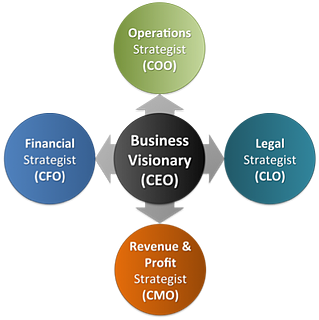
Four Must-Have Strategists Every CEO Needs
Sun, May 8, 2011 — Every CEO has the responsibility to set the vision and make certain the strategies to address this vision are created and implemented. The CEO must determine what resource options are best suited to help develop and implement the various strategies and budget accordingly.
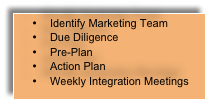
Building Company Value After an Acquisition
Sun, Mar 27, 2011 — Marketing’s Role in Post-Merger Integration The deal was just signed! Now what do we do? How many times have we heard this familiar cry? You are not alone. Over 70% of the deals completed today fail to add company value! The primary reason for most failures: poor post-merger integration planning and execution. The integration of two businesses after an acquisition is no longer restricted to the domain of Finance and IT. Markets drive our businesses today! The role of Marketing in building company value after an acquisition is more critical than ever before. To build market share, competitive dominance and product superiority, Marketing’s approach to the integration program must be very systematic. Marketing must uphold the brand, maintain customer confidence and leverage all possible synergies while vigilantly monitoring ROI. As if this isn’t a difficult enough balancing act, Marketing must articulate the longer-term “go-to-market” strategy to ensure the continuity of value enhancement programs long after the integration process is complete. So where do you begin?

7 Tactics for Customer Closeness with Improved Customer Profiles
Thu, Dec 23, 2010 — Customer Closeness Begins with Great Customer Profiles Think about your ideal customers. Do you have customer profiles to better understand who they are? Do you know them well or are they strangers? If they’re consumers, you might know basics like age, gender, household income, and some of what they buy. If they’re a business, you probably know what industry they’re in, what their revenues are, and some trends facing them. But knowing the basics won’t tell you what issues they face in their daily lives or business, how well they are or aren’t resolving those issues, where they go to find out more about resolving things and how they go about making a decision. You need to know what motivates them, how their attitudes and actions are measured, and what their priorities are. With detailed customer profiles, you can better customer closeness for your company. How do you get better customer profiles? Get to know your customers.
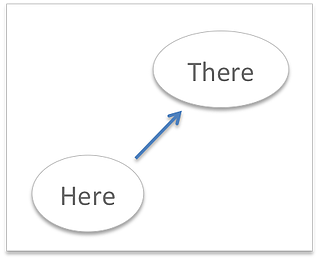
CEOs: Getting Business "From Here to There"
Sun, Sep 12, 2010 — I spent part of last month enjoying and being "filled" at the Willow Creek Global Leadership Summit. One of my favorite concepts was something so simple and yet so rich that I can't stop thinking about it: the idea that leadership is all about getting from HERE to THERE. Bill Hybels tee'd up the notion. And then soon after, Jim Collins built upon it in his "How the Mighty Fall" discussion.