.png?width=1500&height=398&name=CO_Corporate%20Logo%202021_4C_HOR_FNL-1%20(1).png)

Go-To-Market Cultural Alignment: The Invisible Variable in U.S. Expansion
Many companies that find success outside the United States have one thing in common: the need to succeed in the U.S. market.
That is not complicated or surprising. The United States is the largest economy in the world and, in many categories, the single biggest available market. World Bank data clearly shows the scale of the U.S. economy relative to most global markets. For companies in high-tech, scientific, medical, industrial, and systems integration sectors, the U.S. is not just attractive. It is strategic.
Company leaders want to grow. The U.S. is where they look. They are not wrong.
Too Broad a Brush: The Lack-of-Focus Problem
Wed, Apr 11, 2012 — Perhaps the most common issue I see among all kinds of businesses, from startups to large, established firms, is a lack of focus in their marketing. This generally takes the form of what I call taking too broad a brush to the market — throwing broad, scattershot strategies at the market in the hopes that some of it will stick, instead of pinpointing the most lucrative opportunities and then choosing the right applications — the right brush, if you will — to get the most of out those opportunities.

3 Steps to Improving Customer Retention
Wed, Mar 28, 2012 — As someone who once helped the pest control giant Terminix exterminate a nasty customer retention problem, I've seen what a difference a few strategic adjustments can make. So if you're facing the same issue, let me assure you that there are steps you can take to stamp it out.
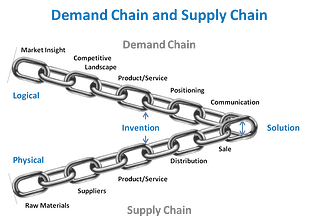
Growth Opportunity: The Demand Chain
Mon, Mar 19, 2012 — Efficiency Only Goes So Far The last ten years of American business have been focused on integrating and perfecting operational efficiencies through the perfection and active management of the Supply Chain. For the last couple of years of economic turmoil, many companies have almost exclusively focused on supply chain efficiencies as a strategy for survival. Now the challenge is taking the expertise and company culture focused on linear thinking and introspection of the supply chain and start growing again.

New Twist to Executive Staffing: Think EaaS
Tue, Feb 14, 2012 — Executives for Rent While management consultants, marketing agencies and executive staffing have been around for decades, the notion of “hiring” just the amount of executive talent you need is something relatively new. It wasn’t until 1993 that John and Doug Tatum founded the firm that became synonymous with fractional CFOs. Their part-time executives join companies that can’t justify a full-time chief financial officer. Over time, Tatum grew to offer CIOs, COOs, and other “Os”. Jim McBride, senior managing member of Blue Sage Capital here in Austin, TX, once said to me, “if one of our companies needs a CFO, I know I can pick up the phone, call Tatum, and it’s done.” Great Idea for Marketing Execs Clearly, our firm Chief Outsiders is fashioned after this model. We see a growing demand for part-time or interim chief marketing officers. We’re even running ads now that say, “Why Hire a CMO?…When You Can Rent One, Fast.” So what’s all this about? Is this new model for executive staffing here to stay? We certainly think so. In some ways, it was inevitable. It’s even similar to shifts in other markets, including how people access technology services.

Marketing vs. Sales: Turning Antagonism into Alliance
Wed, Feb 8, 2012 —

The Challenges of Introducing New Medical Technologies
Mon, Jan 30, 2012 —

DRIVE: What Motivates Millennials?
Sat, Nov 26, 2011 — Recently, I spent a week working on a project about 90 minutes away and decided to make my commuting time "profitable" be listening to an audio book. Since I was driving, I chose "Drive: The Surprising Truth About What Motivates Us" by Daniel Pink. It was an inspired choice. It is especially relevant to those of us who work with today’s “Millennial” generation and since, in addition to my work as a Chief Outsider, I also teach an undergraduate course at Rutgers University, its message really resonated with me. Pink shares lessons from four decades of scientific research on human motivation. He explores what science knows about the subject and compares it with what business does — and does not do. He examines the three elements of true motivation — autonomy, mastery, and purpose — and offers simple ideas for putting these concepts into action.
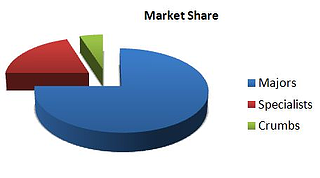
Maximizing Your Position In Your Market
Mon, Sep 26, 2011 — Every company must develop a strategic direction that best fits its capabilities and its standing in its marketplace. Most business categories fall into similar market share patterns. There are three major players who, combined, have roughly 70-90% of the market. Then you have a group of small savvy specialists that have identified an underserved audience within the market. These tend to be businesses that succeed based on lower volumes, by definition, but much higher margins. In general, they tend to have no more than 5% of the market each. And, finally, you have the remaining companies in the category that live on the crumbs that are left over.

Price Erosion: Is Your Day-to-Day Mindset Killing You?
Tue, Sep 20, 2011 — Grow or die. Grow wrong and die a slow death. Every CEO is faced with the challenge of ensuring results today, this month, this quarter and this year. And everyday tradeoffs need to be made. For example, how often does the CEO get requests for discounting? And when the company responds to these short-term opportunities to secure a big order, how will it limit any negative impact on the long term pricing strategy?