.png?width=1500&height=398&name=CO_Corporate%20Logo%202021_4C_HOR_FNL-1%20(1).png)

How to Engage Hard-to-Reach CXOs: The New Growth Playbook
This blog is part of Chief Outsiders’ New Growth Imperative series, designed to help CEOs and leadership teams engage executive decision-makers at targeted strategic accounts by turning deep insights into compelling customer value.

Big Data – More Transformational Than the Gutenberg Printing Press?
Sat, Nov 16, 2013 — Last month I visited the Gutenberg Museum in Mainz, Germany. Until this visit, I had not fully considered the impact the invention of the printing press had on the dissemination of knowledge and in enabling democracy. Prior to Gutenberg’s invention, the transfer of recorded information was reliant on scribes copying information by hand from one book to the next. After the printing press, multiple copies of a document could be created, increasing the dispersion of knowledge and lowering its acquisition cost. More information, lower cost.
Seven Considerations in Evaluating your Marketing and Sales Process
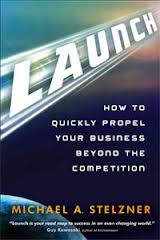
Sun, Jun 23, 2013 — I just finished reading several books that come at the changes in the marketing and sales process from different perspectives. Launch by Michael Stelzner, discusses how to use social media to grow your brand and your business. It includes some very pragmatic tools and examples for the marketing crowd. I highly recommend it as a primer for anyone interested in how to optimize their social media efforts. Sales Shift by Frank Belzer presents how the buying process has changed and how it will continue to evolve. Of particular interest is Belzer’s discussion of why sales skills that have worked in the past will no longer be effective going forward. When considering the combination of these two perspectives, the transformation of the commercialization process is significant.