.png?width=1500&height=398&name=CO_Corporate%20Logo%202021_4C_HOR_FNL-1%20(1).png)

How to Engage Hard-to-Reach CXOs: The New Growth Playbook
This blog is part of Chief Outsiders’ New Growth Imperative series, designed to help CEOs and leadership teams engage executive decision-makers at targeted strategic accounts by turning deep insights into compelling customer value.

Keeping it Real: The Next Four of 10 Reasons Why Your SWOT is Really a SWAG
Mon, Oct 17, 2016 — Let’s keep it real: While myriad technology-driven changes have garnered much of our strategy-related attention and interest over the last several years, the need to evaluate an organization’s fundamental strengths, weaknesses, opportunities, and threats is more important than ever.

Let’s Get Real! Three of 10 Reasons Why Your SWOT is Really a SWAG
Mon, Oct 10, 2016 — I once experienced a recurring dream where I stood at the front of Mrs. Streebeck’s fifth grade class, completely unable to speak. “Where is your homework, Mr. Sparrow?” the teacher asked. The shame and guilt of being unprepared caused my throat to tighten and my vocal chords to freeze. It was horrifying. Never mind that in the nightmare I was also fully exposed—buck naked, as we say in the South—but that’s not the point. Even if tucked away in my subconscious, I’ve always been mortified of being unprepared. Most of you reading this post feel the same way – and that’s why you’re here.

What Can Tesla Teach Us About Customer-Focus?
Thu, Oct 6, 2016 — I wouldn’t mind getting my hands on a Tesla. Sleek, fast, future-forward – and electric to boot – the unique combination of “smart” and sustainability features on the Model S, Model X, and Model 3 make the car company’s offerings so irresistible to buyers, that Elon Musk and his team have struggled to keep up with demand.
![Market-Driven Strategy Doubles Annual Revenue for ISTN [CASE STUDY]](https://www.chiefoutsiders.com/hs-fs/file-14389357-jpg/images/business-strategy.jpg?width=320&name=business-strategy.jpg)
Market-Driven Strategy Doubles Annual Revenue for ISTN [CASE STUDY]
Tue, Dec 11, 2012 — In this case study, see how a market-driven strategy helped a business consolidate sales and marketing programs, increase revenue growth, and expand into new geographic markets. As a management buy-out company of a Westinghouse division, IST produced instrumentation and optics used in the nuclear power, defense, safety and spectrophotometer markets.

The Power of Yelp: You Can't Ignore It
Thu, Oct 4, 2012 — What do you do when you want to try a new restaurant? Well maybe not you in particular, but many people turn to Yelp. Yelp is a social site where members post reviews of local businesses where they eat, shop and go to for services. And many people read those reviews. In fact, Yahoo News reported that a 1/2 star change in reviews can increase customers in the restaurant by almost 20%.

What To Do When Your Sales Are Up But Your Profits Aren't?
Thu, Aug 16, 2012 — Several times as a CMO, I have been called upon to solve a net profit, rather than a total revenue problem. Sales in these cases were not bad. Not where we wanted them to be, but adequate. The problem was that no one was making any money.

Growth Opportunity: The Demand Chain
Mon, Mar 19, 2012 — Efficiency Only Goes So Far The last ten years of American business have been focused on integrating and perfecting operational efficiencies through the perfection and active management of the Supply Chain. For the last couple of years of economic turmoil, many companies have almost exclusively focused on supply chain efficiencies as a strategy for survival. Now the challenge is taking the expertise and company culture focused on linear thinking and introspection of the supply chain and start growing again.
Maximizing Your Position In Your Market
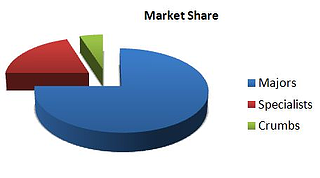
Mon, Sep 26, 2011 — Every company must develop a strategic direction that best fits its capabilities and its standing in its marketplace. Most business categories fall into similar market share patterns. There are three major players who, combined, have roughly 70-90% of the market. Then you have a group of small savvy specialists that have identified an underserved audience within the market. These tend to be businesses that succeed based on lower volumes, by definition, but much higher margins. In general, they tend to have no more than 5% of the market each. And, finally, you have the remaining companies in the category that live on the crumbs that are left over.
Situational Competence: A Requirement for International Management
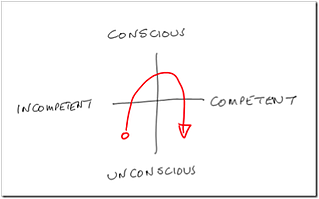
Sat, Aug 6, 2011 — Small and mid-size businesses are becoming increasingly international. This means that CEOs who want to grow need to gain expertise in understanding employees and clients from different cultural backgrounds.