AI Search in 2026:
What’s Changing—and What CEOs Need to Do Next
AI is rewriting how both buyers and consumers find, evaluate, and choose. Most mid-market CEOs we talk with know that AI Search matters – but very few have a clear plan to act on it. This page is where we pull together what's happening and provide CEOs with some actionable next steps.
Here's the short version of what's changed
In the last 18 months, AI search tools — ChatGPT, Google AI Overviews, Perplexity, Gemini, Claude — have moved from novelty to default. 94% of B2B buyers now use AI in their purchasing process. Consumer behavior has shifted just as fast: AI-powered local search increasingly returns one recommended business, not ten. Whether you sell software to enterprises or sandwiches to commuters, your buyers are forming preferences in places your analytics don't see.
The mechanics differ between B2B and B2C, but the strategic question is the same: when an AI engine answers a buyer's question in your category, are you in the answer? Today, for most SMBs, the answer is no — not because their content is bad, but because nobody has translated their content, brand, and technical foundation into something AI engines can read, trust, and recommend. The discipline emerging to address this is called Generative Engine Optimization, or GEO.
That gap is the opportunity. The companies that act on it now — before competitors do, while AI engines are still actively learning who to trust — build advantages that compound every quarter. The companies that wait will spend the next two years trying to catch up to brands that moved first.
Download Our Reports
There's no shortage of writing about AI Search. Most of it is fragmented, vendor-driven, or aimed at agencies and SEO specialists. We've spent the last two quarters synthesizing what matters for growth-stage and mid-market leaders into two volumes — written for CEOs and CROs, not technical teams. Both focus on B2B buyer behavior, since that's where the most measurable data currently exists. Get both with one form.

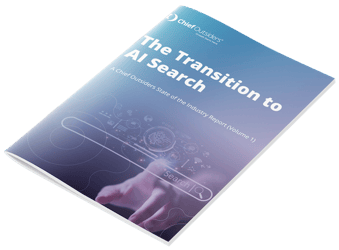
Volume 1: The Transition to AI Search
What changed, where your company likely stands today, and the key strategic questions to bring to your team now.
What you'll get:
- The buyer behavior shift translated for CEOs, not digital specialists
- Three scenarios that describe where most companies sit today
- Seven diagnostic questions to ask your marketing team and agencies
- Realistic 30/90/180/365-day expectations

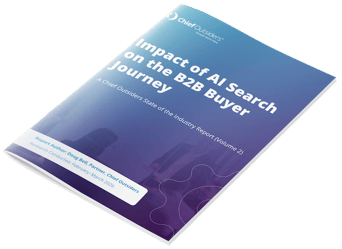
Volume 2: Impact of AI Search on the B2B Buyer Journey
The next chapter — paid media inversion, the AI citation framework, and four strategic positions that guide what you should prioritize today.
What you'll get:
- Why paid media costs are climbing structurally and what to do about it
- The AI Search Performance Framework: which of four positions describes your business and the playbook for each
- Citation correlation data drawn from 300,000+ AI-cited URLs
- 30-day and 90-day action plans by strategic position
Access Both Reports
Enter your details below to receive Volume 1 and Volume 2 in your inbox.
Three Key Areas
AI Search performance comes down to three areas. Most companies are weak in at least two. The right place to start depends on which one is currently costing you the most.
Content
The words and structures AI engines find when they crawl your site. This is more than blog posts — it's how clearly your product pages and case studies answer the questions your buyers are asking, in the language they're using.
In practice: Rewriting an "About Us" page to answer "what problem do you solve and for whom" instead of describing what your company does. Building Q&A-formatted resources around real buyer questions. Replacing promotional language with substance — promotional tone correlates with fewer AI citations.
Brand
The signals that make AI engines confident enough to cite you when a buyer asks. Recognition, third-party validation, review depth and specificity, and consistent positioning across every place AI looks. AI engines reward brands they recognize and trust — even when content quality is similar.
In practice: Aligning how you describe yourself across LinkedIn, G2, Clutch, and your website so the story stays consistent. Investing in executive thought leadership that compounds into citation authority. Building review programs that surface the specific problems you solve.
Technical
The back-end foundation that determines whether AI engines can read your site at all. Schema markup, server-side rendering, listing consistency, and the structured signals that turn your website from a brochure into something AI can parse. Most SMB sites have technical gaps that suppress visibility — and most are quick fixes once identified.
In practice: Adding schema markup to service pages and case studies. Fixing JavaScript rendering so AI crawlers can read your content. Cleaning up business listing inconsistencies across Google, Yelp, and industry directories.
For some clients the priority is content; for others it's the technical foundation; for many it's brand. We work with B2B firms, B2C brands, e-commerce, SaaS, and local businesses, and we shape every engagement to whichever area will move the business furthest, fastest.
Chapter Breakdown
Executive Brief: Your Buyers Changed. Your Marketing Hasn’t.
Why 89% of B2B buyers are now using AI to research vendors—and what that means for your go-to-market model. A wake-up call for leaders still relying solely on traditional SEO.
Ready to make AI Search a competitive advantage?
Chief Outsiders Fractional CMOs work with CEOs to translate AI Search shifts into real pipeline, revenue, and competitive position — across content, brand, and the technical foundation that makes both possible. Engagements scale to your business and focus on whichever area will move things furthest, fastest. We work with B2B firms, B2C brands, SaaS companies, e-commerce operations, and local businesses. Size matters less than clarity of priority.
Learn more about Chief Outsiders
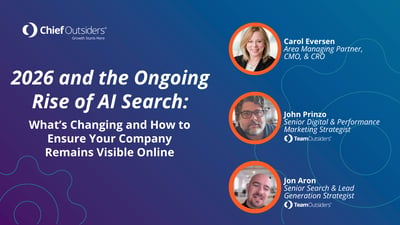
Catch up on our recent webinar
This on-demand webinar explores how AI-powered search is fundamentally changing the way buyers discover and engage with brands — and what that means for mid-market businesses. Featuring expert insights from SEO and AI strategists at Chief Outsiders, the session outlines the key impacts on web traffic, brand visibility, and demand generation.