.png?width=1500&height=398&name=CO_Corporate%20Logo%202021_4C_HOR_FNL-1%20(1).png)

The Contrarian Brand Play: Why Right Now Is the Best Time to Invest in Brand
Part 4 of our four-part series on the evolving AI search landscape and what B2B leaders need to know to stay competitive.

Top 10 FAQs: What CEOs Ask Chief Outsiders
Mon, Aug 24, 2020 — CEOs connect with us because they’ve been referred by one of our clients, their private equity firm, or have found us by searching for “top strategic marketing consulting firms” or something similar. When we meet, we often find that these CEOs are frustrated with their growth. They have a vision for where they want to take their companies, but don’t have a means to turn their vision into actionable plans, and then see them implemented. After a discussion around their specific business challenges and opportunities, they’re curious about the specifics of how Chief Outsiders might be able to help.

Top 5 Actions to Positively Impact Financials that CEOs of Mid-Sized Companies Can Do Now
Thu, Aug 20, 2020 — Co-Authored by Aurora Toth, CMO, Chief Outsiders and John Morris, Partner, B2B CFO We are well past the initial shock that first accompanied the onset of COVID-19, and the ensuing economic downturn. At this point, many CEOs realize that coping strategies need to evolve. So how does a company move forward without increasing financial risk while focusing on future growth? My colleague, John Morris, a Twin Cities-based Fractional CFO with B2BCFO and I recently talked about how we are counseling our clients on this key topic, particularly in light of the still-uncertain future. John offered up five immediate actions CEOs of mid-sized companies should be taking to ensure their companies are set up for financial success.
What can Industrial & Manufacturing CEOs do Right Now?
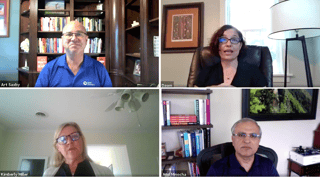
Fri, Jul 10, 2020 — Industry Specific Advice for Marketing in a Time of Recovery from the Chief Outsider CMOs The following summary encapsulates the highlights of a panel discussion for the Industrial Manufacturing sector hosted by Art Saxby and featuring CMOs Kimberly Miller, Atul Minocha and Dawn Werry. For the full benefit, view the discussion video in its entirety (15 minutes). Short of time? See the discussion highlights (6 minutes). When the pandemic first hit, events for the industrial manufacturing sector were changing daily. Now, at the start of the recovery phase the entire industry is adapting. Some companies have had to find completely new markets for their products, while others have started making completely new products. Across the board, supply chains have been disrupted. Buyer behaviors have changed and go-to-market strategies have had to adjust in order to keep business moving.

What You Should Do About “The 80%”
Wed, Jul 8, 2020 — Co-Authored by Kimberly Miller, CMO, Chief Outsiders and Chris Dohl, President, The Alias Group The conventional wisdom of the 80/20 rule is that 80% of your company sales come from 20% of your customers. If you believe that, then you might believe that those top 20% of customers would guarantee success. And from an operational standpoint, maybe the 80/20 rule could turn into the 20/80 rule, meaning that those 20% of customers should take up 80% of your sales team’s efforts. Now more than ever, businesses should be appreciative of their entire customer base—not just the top 20%. The 2020 coronavirus lockdown has shown us that diversity in service and product offerings and diversity in clients and prospects helps any business weather the storm.

How to Right-Size your Marketing Budget and Get C-Suite Alignment – Part Two
Tue, Jul 7, 2020 — Part Two: Aligning Priorities and Spending with the CEO and CFO Part 1 of this article looked at best practices for determining optimal marketing spending levels. In part 2, we look at how marketing leaders need to align with the CEO and CFO on marketing spending priorities. To help answer this question, I’ve turned to marketing strategy and budget expert Peter Mahoney, CEO of Plannuh, Inc. Peter has decades of experience managing marketing teams, strategy and budgets, including managing a $150M annual budget at Nuance. Peter started Plannuh in 2017 to address the pain and suffering companies experience managing marketing budgets and plans with disconnected tools.
What can Travel/Hospitality/Entertainment CEOs do Right Now?
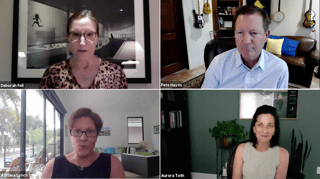
Tue, Jun 30, 2020 — Industry Specific Advice for Marketing in a Time of Recovery from the Chief Outsider CMOs The following summary encapsulates the highlights of a panel discussion for the Travel/Hospitality/Entertainment industries hosted by Pete Hayes and featuring CMOs Deborah Fell, Adriana Lynch and Aurora Toth. For the full benefit, view the discussion video in its entirety (19 minutes). Short of time? See the discussion highlights (6 minutes). The travel and hospitality industries have been severely impacted by the pandemic but companies are slowly starting to re-open for business. It’s an unprecedented time and one of the major underlying sentiments is fear. How can CEOs and businesses in these market segments address and overcome this concern?

How to Right-Size your Marketing Budget and Get C-Suite Alignment
Tue, Jun 23, 2020 — Part One: Determining Optimal Spending Levels and Overcoming Key Challenges Marketing budgets make CEOs and CFOs uncomfortable. They often are large, have lots of complicated moving parts, and their impact can be hard to measure and attribute to marketing. Marketing budgets commonly range from low single digits to 15% of revenue (and even higher for companies undergoing rapid growth). And by the way, there is no one “right” benchmark for marketing budgets. In this two-part series, marketing strategy and budget expert Peter Mahoney and CMO Jeff Loeb will pull from their experience and share tips on right-sizing marketing budgets and preparing for challenges you may encounter.

Keeping Up With Technology
Thu, Jun 18, 2020 — According to a recent study by Chief Outsiders, a national business strategy consulting firm, 88% of Chief Marketing Officers (CMOs) see difficulty in staying ahead of technological advancements.
How Should Restaurants Deal with Coronavirus Consequences?
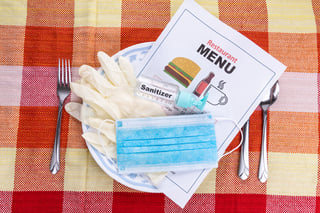
Wed, Jun 17, 2020 — The Coronavirus, also known as COVID -19, is already affecting the economy, at least in the short term, with cancelled events, cruises and less foot traffic to retail stores and restaurants. But will it continue and for how long? The answer is we just don’t know. So, what can restaurants do to mitigate the negative effects of this pandemic on their business?