

Does Your Contracting Pipeline Live in the Owner’s Head?
Relationships matter in construction, and most subcontractors have good ones. The owner or president carries the key customer relationships, and the project managers carry everything else. That arrangement can work well. It is also fragile. In our last post, we asked whether you know by name who owns each strategic account. This one looks at what happens when the answer is the owner.

Outstanding CEOs Often Play It By Ear
Wed, Oct 16, 2013 — I did not like the Beatles when they first came to America, but I am a contrarian by nature. Today, John Lennon and Paul McCartney are music icons that created a legacy of sound and lyrics. The Beatles created some of the most recognized and memorable songs of today. "I don’t read music, you got a problem with that?" - said Paul McCartney. They created music from what came into their minds. How did they do this and become world renown? I suggest to you they “played it by ear.”

Transforming an Organization: The 4 Steps Every CEO Should Take
Sun, Sep 15, 2013 — Companies can no longer settle for incremental improvement in today’s rapidly evolving and increasingly global economy—organizational transformation is necessary. McKinsey Quarterly, in their June 2011 issue offered the suggestion that in order to sustain high performance, organizations today must build the capacity to learn and keep changing over time and suggested that organizational health was perhaps the ultimate competitive advantage for today's economy. I can not stress more strongly how important the role of the CEO is in visibly participating in transforming an organization and how the CMO can assist in this process. I believe there is no single model for success, and actions will be influenced by the magnitude, need and nature of the change for an organization. But, in my experience there are four steps every CEO should take to transofrm an organization. I've found these basic change management steps always apply and can be scaled to fit every organizational transformation. The premise of these four steps a CEO should take to transform an organization is based on two important tenets that I believe must be considered when implementing an organizational transformation. First, it is people and relationships that make up organizations, not buildings, systems or processes. And second, most people don't like being forced out of their comfort zones and they must have a reason to do so. With that said – lets review the four steps for integrating change management into a new business strategy.

Great CEOs “Eat a Frog First Thing Every Day”
Wed, Aug 7, 2013 — “If you eat a frog first thing in the morning that will probably be the worst thing you do all day.” – Mark Twain. Mark Twain truly had a way with words. Most of us have read at least one of his 28 books. Much has been written about his famous “eat the frog first” quotation including articles that question whether he actually said or wrote this. Regardless of the truth, the analogy is intended to help great leaders tackle more difficult, dreaded and distasteful actions first everyday. There are some business coaches that don’t agree with doing the most unpleasant work first, but they all agree that successful business leaders are great at prioritizing their activities every day.
The Rise and Fall of Executives
Wed, Jul 24, 2013 — This blog is written by guest blogger Per Ohstrom. In my years in business, I have noticed how top executives often come out of Operations, which is a little counter- intuitive considering the number of highly trained Finance, Marketing or R&D managers there are in organizations. I have also seen execs crash and burn, who used to be well performing in a functional role. What’s going on? In a report from the Chally Group “Why Global Leaders Succeed and Fail”, published by Right Management, the researchers share some interesting findings.

Hire Slow and Fire Fast Part I
Sat, Jun 8, 2013 — Today's blog is by guest blogger Kevin Dincher. 25 years ago as a new manager, I had to fire an employee for the first time. When I inherited her, she was a long-time employee with a lengthy history of poor quality work, low productivity, negativity and troublesome relationships. Firing her was drawn-out and excruciating—but I learned early on the importance of hiring the right people—and not hanging on to the wrong ones.
Cracking the Code of Organizational Change
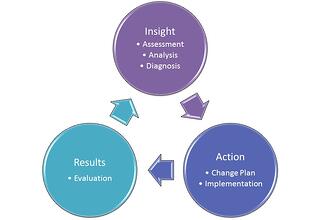
Sun, Mar 10, 2013 — It was 1996 when John Kotter first published Leading Change and told us that 70% of all major change efforts by businesses fail. Nearly two decades later there is little evidence that any improvement has occurred, and this 70% failure rate has become axiomatic in business development and change management circles. Despite some individual successes, change remains difficult—and few companies manage change successfully. Organization change is a strategic imperative in today’s fast-paced business environment. Unfortunately, in the pursuit of change and trying to be the best, CEO’s and their executive team frequently chase after the latest and greatest idea. They lose focus and become mesmerized by all the advice available in print and online about why companies should change, what they should try to accomplish, and how they should do it. This proliferation of recommendations often leads to failure. Cracking the Code of Change

D.A.R.E. to Grow
Wed, Feb 20, 2013 — Sometimes it is difficult for our organizations to take the steps necessary to grow – to change – to leave what is comfortable and strive for something more. We stop ourselves with questions like: How will my organization adapt to the changes? Can we handle the new challenges? Do we have the skills required to meet the new demands? Why should we upset what is already going well? It makes perfect sense for us to question. In fact, we wouldn’t be doing our jobs as leaders if we didn’t. At some point though, if we want to move forward, we must also move beyond the questions. We must take our own dare, if you will – and D.A.R.E. to grow. Here are some thoughts to get us started. D = Discover
The "Unconscious Incompetent" or Don't Be "Mr. Magoo"
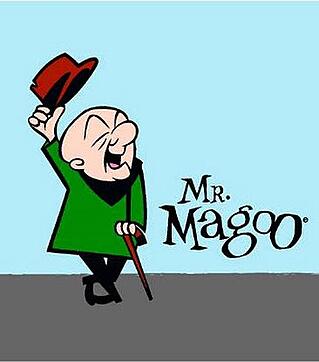
Tue, Jan 1, 2013 — Do you remember Mr. Magoo? He was a cartoon character who used to cause disasters all around him and be totally unaware of them. Cars would overturn, store aisles would collapse, boats would crash and Mr. Magoo bumbled on his way, oblivious to it all. Some US business people act the same way when starting an international arm to their business.
The Importance of Authentic Service and Hospitality in Business
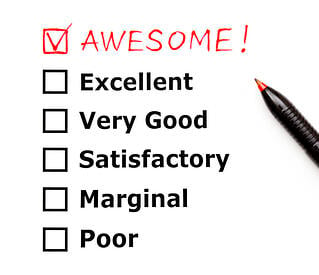
Tue, Oct 2, 2012 — What Makes Exceptional Service in Your Business? Recently I have been looking more closely at service — which factors contribute to great service in business and which elevate the quality of service to exceptional levels. I have considered both the objective, measurable components of service as well as the subjective — less tangible factors that focus on the specific relationship between those served and those serving. It's fairly simple for us to evaluate the concrete aspects of service. We, as marketers, preach and follow mantras of "what gets measured, gets done," and "if we can't measure it, we can't manage it." We rate and measure service quality with customer satisfaction research and Net Promoter scores. Measurement is, and will continue to be, a critical component of our understanding and responding to day-to-day performance in our businesses. In today's increasingly competitive market though, is evaluating only the easily measured variables sufficient? Is doing this alone enough to raise our customer service from great to exceptional? Does it ensure that our business performance is consistent with our vision, values and strategy?