.png?width=1500&height=398&name=CO_Corporate%20Logo%202021_4C_HOR_FNL-1%20(1).png)

Outsider Insights | You Built Something Different. Your Messaging Made It Sound the Same.
Outsider Insights
Across Chief Outsiders, we talk to hundreds of CEOs every month. In this series, we explore the trends and challenges we’re hearing from these discussions – and what you can do if you’re facing the same issues in your business.

Attention, Company Founders: Keys to Avoiding Colossal Marketing Flops
Mon, Jul 25, 2016 — They’re some of the worst American marketing flops of all time: Smith & Wesson Mountain Bikes, Cosmopolitan Yogurt, and Coors Rocky Mountain Water. These three powerhouses are some of the most well-known brands on the planet – and yet they still hit the skids when their seemingly unique and interesting idea failed to meet customer expectations and gain traction in the market.

YOU HAVE PERMISSION TO TAKE A BREAK.
Sat, Nov 9, 2013 — Guest Blog by Joanie Rufo, Initiate Consulting. One of the common themes I see in my work coaching executive leaders is the unilateral struggle of leaders to rest and renew. “EACH OF US NEEDS TO WITHDRAW FROM THE CARES WHICH WILL NOT WITHDRAW FROM US.” – Maya Angelou

Hire Slow and Fire Fast Part I
Sat, Jun 8, 2013 — Today's blog is by guest blogger Kevin Dincher. 25 years ago as a new manager, I had to fire an employee for the first time. When I inherited her, she was a long-time employee with a lengthy history of poor quality work, low productivity, negativity and troublesome relationships. Firing her was drawn-out and excruciating—but I learned early on the importance of hiring the right people—and not hanging on to the wrong ones.

Quid Pro Quo? Or Quid Pro NO? Discounting Can Be Dangerous!
Wed, Jun 5, 2013 — What is "Quid Pro Quo? Wikipedia defines it as an exchange of goods or services, where one transfer is contingent upon the other. Phrases with similar meaning include: "give and take", "tit for tat", and "you scratch my back, and I'll scratch yours." Recently, I have been involved in several discussions with CEOs on charging for their goods and services. The discussions weren’t concerning the actual price for the services, but the ultimate cost between the buyer and the seller. Let’s share some examples. (with the names changed to protect the innocent or, in some of these cases, guilty parties) The Stories One CEO—I will call him Joe—runs an executive consulting firm. He had a problem with a leak in his house. He needed immediate help and called one of his clients Sam, who is the owner of a construction company. Sam immediately sent someone out to fix the leak but didn’t send Joe a bill. When Joe asked him about it, Sam responded, “No problem. You’re a friend. Don’t worry about it.” Adele owns a restaurant in town. Bill, an influential colleague held several events there but has been ignoring the bills Adele has sent. The amounts are significant. Adele is worried about pressing Bill too hard as he could possibly react strongly and hurt her restaurant business. Bill has been referring business to her. Tim is the CEO of a local accounting firm. The firm needed a new website. He contacted Rachel who owns a website design firm, and they discussed a cost-effective approach to building the site. They decided to exchange professional services rather than money, so he is now taking care of her accounting and she is taking care of his website. Any of these sound familiar? Have you encountered any similar situations? For a another perspective on this, read this legal blog.
The Difference between CEOs That Manage vs. Lead
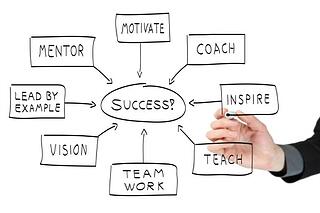
Fri, May 3, 2013 — Today's blog is by guest blogger Kevin Dincher.

Making our Mistakes Pay – Rather than Paying for our Mistakes
Sun, Dec 9, 2012 — No one likes making mistakes, but we all make our fair share of them. Humans are fallible, products and processes fail, and things slip through the cracks. Even the best-managed companies can go awry. Unfortunately, mistakes are not only inevitable; they can also be very costly. As a CEO you know that mistakes can cause operations costs to rise and productivity to falter—and most damaging of all, they frustrate our customers so that they start thinking about taking their business elsewhere. If we act quickly to fix our mistakes, however, we can make our mistake pay off. Losing and replacing customers is expensive. 91% of unhappy customers will not willingly do business with us again (Source: U.S. Office of Consumer Affairs). If they have the option, they will take their business elsewhere. When customers leave us, we need to expend resources getting new ones—and it generally costs a great deal more to get a new customer than to keep an existing one. Think of the difference in the time, effort and money that goes into marketing and sales to bring in new business compared with how little effort it takes to stay connected with a customer you already have. Losing and replacing customers is expensive.

The CEO Is the Chief Team Builder
Tue, Nov 27, 2012 — The concept of team building has been around since the 1960s and continues to multiply as CEOs increasingly embrace developing people and teams as an indicator of their own leadership success. But, to be successful, effective team development for a CEO requires knowing when to do team building—and when not to do team building. I’ve seen CEOs insist on referring to their employees as a team and have pointed to how well their employees get along with one another as the metric of their effectiveness as a team. Calling a group of employees a team doesn’t make them a team, no matter how well they get along. They may just be a group of workers who really like one another—or at least have learned to pretend to like one another. When does a “Group” become a “Team”?

The Accidental CEO and 5 Steps to Avoid Being the Reluctant CEO
Sun, Oct 28, 2012 — The Age Old Story You were content in life, working to contribute in operations, sales or product/technology development. You were a master, an expert in your field and were comfortable in your skin. Then the business was rocked when the leading family member became seriously ill; or your key partner suddenly seemed to go nuts — focusing on personal enrichment at the expense of the business; or simply sudden CEO succession was needed. It is an age-old story, a company needs a competent new leader — and through no fault or desire of your own, you find yourself playing the central role of the accidental or reluctant CEO. Over the years, I have met countless CEOs who never aspired to the position of business leader. Some took on the three letter title at startup but never really expected to be the leader of a significant, complex and demanding business. Others were suddenly thrust into the role to save the company or replace a previous CEO. Regardless of how it transpired, these CEOs did not aspire, position or groom themselves to lead a business, but they did step up when required.
The 3 Distinct Advantages of Vistage
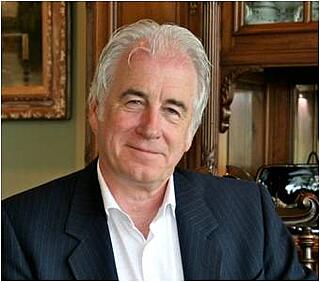
Sat, Sep 15, 2012 — Leaders of mid-sized companies are pretty impressive people. As leaders, they bring insight, determination and courage to work every day. So where do the great CEOs of these companies go to get better? Some 16,000 mid-market leaders worldwide have figured a way to get expert advice – from each other. As a Vistage member, a roomful of CEOs during any given monthly meeting may be directing their focus on your business. Over time, they’ve gotten to know how you tick. And they’re providing insights; offering their experience; even holding you accountable from one meeting to the next. That’s the core value that Vistage brings its members. Chair Leadership The concept of CEO peer groups isn’t unique. But it’s highly effective. And Vistage has honed the practice to an art. By recruiting top business leaders still in their prime into the role of Chairs, then assembling “boards” of CEOs of similarly sized non-competitive companies, Vistage orchestrates an environment that is unmatched by any other CEO peer group organization that we’ve encountered at Chief Outsiders. Patrick “Pat” Mulligan of Austin knows the value of Vistage inside and out. As a young CEO, he joined Vistage in 1987 and learned firsthand how a peer group of business leaders could improve performance. Now, Pat is putting his decades of experience to use as one of the founding Chairs in Austin, and leader of 3 peer groups. There are several dynamics in his peer groups that work together to ensure value for his members: