.png?width=1500&height=398&name=CO_Corporate%20Logo%202021_4C_HOR_FNL-1%20(1).png)
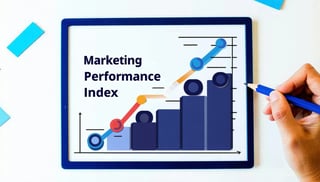
Beating Industry Benchmarks
In my previous blog, I discussed a fast way to assess relative marketing performance, and covered proven approaches to improving six industry benchmark-based Key Performance Indicators (reach, share, engagement, loyalty, pipeline, and progression) that can boost overall marketing effectiveness. Today, I’m going to review some of the key findings from recent research around Marketing benchmarks. I’ll select key metrics from each of these three benchmarks and their implications for optimizing marketing performance.
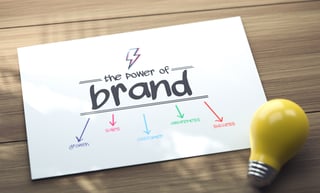
What Can Chester Cheetah Tell You About Your Brand?
Fri, Jul 18, 2025 — Imagine an argument about whether Chester – yes, Chester of Cheetos fame – should be 2D or 3D. The debate raged in almost every corner of Frito-Lay headquarters at the time. There were strong opinions on both sides and an even more provocative discussion about the brand’s target audience. At the time, two of every three bags of Cheetos purchased were consumed by adults, not tweens and teens. So, the debate was fair, if inconvenient.
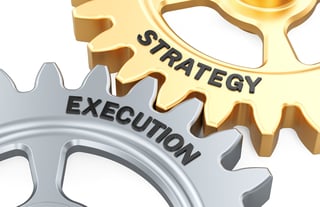
From Concept to Execution: A Step-by-Step CEO Playbook for Go-to-Market Success, Part Two
Thu, Jul 17, 2025 — In Part One, we established the critical groundwork: vision clarity and deep market understanding. Now it’s time to convert strategy into results. This section of the playbook takes you through the essential steps to build, activate, and scale your go-to-market initiatives.

When the Founder Is the Rainmaker: How to Scale Without Losing the Spark
Mon, Jul 7, 2025 — In many founder-led businesses, the founder isn’t just the leader—they’re also the best (and often only) rainmaker. They land the big deals. They have the trusted relationships. They know the pitch inside and out because they are the pitch. It works—until it doesn’t. As the business grows, this model creates a bottleneck. Every new opportunity depends on one and only person. And it’s the same person every time. But there’s a downside. When that person is also responsible for running the business, mentoring the team, and shaping the vision, something eventually gives.

AI Isn’t a Replacement—It’s an Accelerator: How SMBs Can Use AI to Elevate Human Performance Across the Organization, Part 2
Thu, Jun 26, 2025 — AI as an Executive and Organizational Force Multiplier In Part 1, we explored how AI streamlines execution in outward-facing functions like marketing, sales, and customer service. Now it’s time to turn inward. In this second half, we’ll examine how AI empowers internal operations, drives better financial strategy, and helps executive leaders see farther and act faster—without sacrificing the human qualities that make a business thrive.

Go Time? Or Just Another Head Fake? How Mid-Market CEOs Should Move Forward Now
Wed, Jun 25, 2025 — Six months ago, we diagnosed a condition gripping mid-market companies across the country: Waitflation. Leaders were holding back—not because of financial hardship, but because of economic ambiguity. Interest rates were high, forecasts were fuzzy, and confidence was low. The result? A national game of “wait and see.” Now, as we enter a volatile summer, it’s time to ask: Is it go time?

Your Legacy, Amplified: Preparing the Business for Growth Without You at the Helm
Wed, Jun 25, 2025 — Every founder I’ve ever met pours themselves into their businesses—every decision, every milestone, every customer won (or lost) feels personal. And rightfully so. For many, the company isn't just a source of income; it's the embodiment of years of grit, sacrifice, and belief. But here’s the hard truth: what helped a company grow in its early years often isn’t what’s needed to scale. At some point, the business becomes bigger than one person—even the founder. That moment doesn't have to feel like an ending. In fact, it’s the beginning of something powerful.
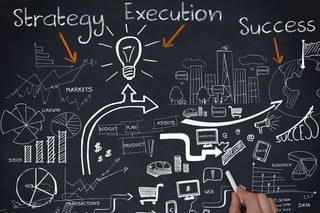
From Concept to Execution: A Step-by-Step CEO Playbook for Go-to-Market Success, Part One
Mon, Jun 23, 2025 — Every CEO knows this nightmare scenario: Your team spent months crafting the "perfect" go-to-market strategy, only to watch it crumble during execution. Resources hemorrhage, timelines slip, and while you're still troubleshooting internal alignment issues, competitors are capturing the market opportunity you identified first.

Rapid Marketing Performance Improvement
Mon, Jun 23, 2025 — With tariffs, the Middle East and trade tensions increasing the odds of a near-term recession and persistent inflation, it's more important than ever for CEO’s to increase marketing’s overall performance and the ROI of every marketing dollar spent. I created the Marketing Performance Index and Assessment to help CEO’s and their organizations quickly assess relative marketing performance. The Marketing Performance Assessment is an objective way of quantifying the impact of Marketing.

Fast-Track Research: Creating Credible Thought Leadership Content Without Breaking the Bank
Mon, Jun 23, 2025 — My previous articles explored how research-based thought leadership transforms prospect relationships and the framework for implementing it in your ABM strategy. As a fractional CMO working with mid-market B2B companies, I frequently hear: "Research sounds great, but we don't have the resources for it."