.png?width=1500&height=398&name=CO_Corporate%20Logo%202021_4C_HOR_FNL-1%20(1).png)
The Chief Outsider
.svg)
Recent Posts

Turning Customer Insight into Customer Value
This blog is part of Chief Outsiders’ New Growth Imperative series, designed to help CEOs and leadership teams engage executive decision-makers at targeted strategic accounts by turning deep insights into compelling customer value.

6 Steps to Understanding and Adapting to the Contours of Change
Wed, Aug 14, 2013 — Markets, like the companies and people who participate in them, are constantly evolving. Many an organization has seen its growth derailed or even faced its demise for failing to pick up or act on a key evolution in their market. The news about the sale of the Washington Post to Amazon founder Jeff Bezos brought that point back to center stage.

The CFO says cut costs, Sales says cut prices. What’s a Leader to do?
Sun, Aug 11, 2013 — The following post is written by guest blogger Per Ohstrom In the business cycle, there comes a time that looks something like this: Sales are down across segments and products. Certain product lines perform worse than others, but there is some softness across the board. Budgets have been revised and Board expectations reset, but the business still does not meet targets.

Great CEOs “Eat a Frog First Thing Every Day”
Wed, Aug 7, 2013 — “If you eat a frog first thing in the morning that will probably be the worst thing you do all day.” – Mark Twain. Mark Twain truly had a way with words. Most of us have read at least one of his 28 books. Much has been written about his famous “eat the frog first” quotation including articles that question whether he actually said or wrote this. Regardless of the truth, the analogy is intended to help great leaders tackle more difficult, dreaded and distasteful actions first everyday. There are some business coaches that don’t agree with doing the most unpleasant work first, but they all agree that successful business leaders are great at prioritizing their activities every day.

SEO for the CEO: What You Need to Know, How Not to Screw It Up
Sun, Jul 28, 2013 — Maybe it’s happened to you: your board looks at your budget for web marketing and asks about key performance indicators. As the CFO or CEO, you boldly look over the data from your marketing team and condense the complexity to a quick test: How are we doing on these five keywords? One of your board members measures the effectiveness by doing web searches: Are we ranked in the top 3 on Google for this one? And as the wind shifts, Marketing starts to focus on a few keywords, looking at rankings instead of results. Meanwhile, the OTHER 500 search terms that are driving traffic go under the radar, and the bounce rate (one page visits) doesn’t budge. While one search term can look like the prize because it has high volume, it doesn’t necessarily convert into new business. And more traffic doesn’t necessarily mean more sales. Top rankings don’t matter if they’re the wrong search terms.
The Rise and Fall of Executives
Wed, Jul 24, 2013 — This blog is written by guest blogger Per Ohstrom. In my years in business, I have noticed how top executives often come out of Operations, which is a little counter- intuitive considering the number of highly trained Finance, Marketing or R&D managers there are in organizations. I have also seen execs crash and burn, who used to be well performing in a functional role. What’s going on? In a report from the Chally Group “Why Global Leaders Succeed and Fail”, published by Right Management, the researchers share some interesting findings.

Marketing Budget: How much should a CEO spend?
Wed, Jul 17, 2013 — How much sould a CEO spend on a marketing budget? Whether or not it is the first question asked, it is usually one of the first questions a CEO thinks about when discussing his or her marketing efforts: how much should I spend on a marketing budget? Well, the average company spent 10.4% of its revenue on marketing in 2012. And according to Gartner, that marketing budget is scheduled to go up by 6% in 2013. Now this includes salaries of the marketing people, but it doesn’t include things like software licenses or servers for the data. And this spend widely varies for the types of companies from IT at 3.5% to over 12% for media companies.

Five Marketing Lessons to Learn from Jimmy Buffett
Sun, Jul 14, 2013 — Friends asked my husband and me to join them for a Jimmy Buffett concert recently near Dallas, Texas. Never in our wildest dreams did we think that over a span of a few hours we would escape to a tropical venue where we would be entertained while learning marketing tips from a barefoot guitarist on a stage singing about margaritas, cheeseburgers and shark fins. Jimmy Buffett’s brand, inspired by his lyrics and lifestyle, has taken on a life of its own. I made it my mission to find out what Jimmy Buffett has done so right to grow a loyal fan base comprised of all sizes, shapes, ages and social economic classes. What I discovered during the course of observation and investigation, are the following five marketing tips. 1. Focus your strategy on a niche that plays to your strengths. 2. Build a brand that leaves a visual image in the mind of the customer. 3. Engage and listen to your target audience to grow loyal followers. 4. Establish partnerships that stay true to and enrich your brand. 5. Give back to the community in a way that complements your brand. Keep reading if you want to know how these tips worked for Jimmy Buffett and how they can work for you.
Seven Considerations in Evaluating your Marketing and Sales Process
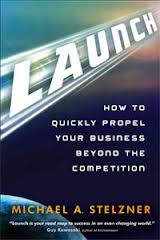
Sun, Jun 23, 2013 — I just finished reading several books that come at the changes in the marketing and sales process from different perspectives. Launch by Michael Stelzner, discusses how to use social media to grow your brand and your business. It includes some very pragmatic tools and examples for the marketing crowd. I highly recommend it as a primer for anyone interested in how to optimize their social media efforts. Sales Shift by Frank Belzer presents how the buying process has changed and how it will continue to evolve. Of particular interest is Belzer’s discussion of why sales skills that have worked in the past will no longer be effective going forward. When considering the combination of these two perspectives, the transformation of the commercialization process is significant.

5 Ways to Maximize Business Value for Selling a Business
Wed, Jun 19, 2013 — Today's blog is by guest blogger, Curt Cyliax. How can you boost your company’s short-term earnings while maximizing long-term value? After managing the purchase and sale of a number of companies, we’ve identified five primary drivers to maximize business value. If you’re a business owner who plans on selling a business or transfering your company in the future, you’ll want to know how you can maximize the value of your business, make it more attractive to potential buyers, and get top dollar for your business.