.png?width=1500&height=398&name=CO_Corporate%20Logo%202021_4C_HOR_FNL-1%20(1).png)
The Chief Outsider
.svg)
Recent Posts

Turning Customer Insight into Customer Value
This blog is part of Chief Outsiders’ New Growth Imperative series, designed to help CEOs and leadership teams engage executive decision-makers at targeted strategic accounts by turning deep insights into compelling customer value.

Hire Slow and Fire Fast Part I
Sat, Jun 8, 2013 — Today's blog is by guest blogger Kevin Dincher. 25 years ago as a new manager, I had to fire an employee for the first time. When I inherited her, she was a long-time employee with a lengthy history of poor quality work, low productivity, negativity and troublesome relationships. Firing her was drawn-out and excruciating—but I learned early on the importance of hiring the right people—and not hanging on to the wrong ones.

Quid Pro Quo? Or Quid Pro NO? Discounting Can Be Dangerous!
Wed, Jun 5, 2013 — What is "Quid Pro Quo? Wikipedia defines it as an exchange of goods or services, where one transfer is contingent upon the other. Phrases with similar meaning include: "give and take", "tit for tat", and "you scratch my back, and I'll scratch yours." Recently, I have been involved in several discussions with CEOs on charging for their goods and services. The discussions weren’t concerning the actual price for the services, but the ultimate cost between the buyer and the seller. Let’s share some examples. (with the names changed to protect the innocent or, in some of these cases, guilty parties) The Stories One CEO—I will call him Joe—runs an executive consulting firm. He had a problem with a leak in his house. He needed immediate help and called one of his clients Sam, who is the owner of a construction company. Sam immediately sent someone out to fix the leak but didn’t send Joe a bill. When Joe asked him about it, Sam responded, “No problem. You’re a friend. Don’t worry about it.” Adele owns a restaurant in town. Bill, an influential colleague held several events there but has been ignoring the bills Adele has sent. The amounts are significant. Adele is worried about pressing Bill too hard as he could possibly react strongly and hurt her restaurant business. Bill has been referring business to her. Tim is the CEO of a local accounting firm. The firm needed a new website. He contacted Rachel who owns a website design firm, and they discussed a cost-effective approach to building the site. They decided to exchange professional services rather than money, so he is now taking care of her accounting and she is taking care of his website. Any of these sound familiar? Have you encountered any similar situations? For a another perspective on this, read this legal blog.

5 Steps to Building Customer Service into your Company's DNA
Wed, May 15, 2013 — This is an updated version of an article published in Yahoo Voices by Barbara Fowler, CMO and partner at Chief Outsiders "Make new Friends but Keep the Old Ones" True for Customers too. Positive customer service experiences are the key to building and maintaining a business. Multiple studies have repeatedly concluded that gaining new customers is much more difficult than keeping your current customers. A delicate balance must be kept between actions that go above and beyond in retaining customers and actions that focus on immediate costs or promote profitability for an organization. Just as important as this balance is the integration of a high quality customer service approach or mindset throughout all departments of a business.

"I Don't Know Anyone Here" - 8 Tips on What Not To Do!
Sun, May 12, 2013 — This is a revised blog, originally posted on UNDER30CEO. I am sure most of you have been in a situation similar to mine. Last month, I attended Social Slam in Knoxville, Tenn. I knew absolutely no one who was going to the conference, but I decided to attend because I believed it was relatively close to my new home in Charleston, S.C. (Seven hours later, in a tremendous rainstorm, I arrived. I stand corrected.) The experience gave me the opportunity to adopt a fresh perspective on attending a conference as an unknown. I knew it would be hard to go and meet people, but I figured, “So what? I’m an adult.” I was up for it — and you should be, too. Pushing myself beyond my comfort zone improved my networking skills and expanded my circle in new ways.

Whole Brain Brand Positioning
Fri, May 10, 2013 — There are innumerable articles, books and classes devoted to aspects of developing a distinctive brand positioning. And, why not? Your brand positioning should drive all communication, and, as a wise man once told me — EVERYTHING communicates. However, the elements of brand positioning have become disjointed and disconnected over time, as focus shifts form one aspect to another. Also, it feels like brand positioning has become unnecessarily over-complicated by the scholarly focus, causing the project of sitting down to develop a new brand position to end up on the “someday, maybe” pile for many busy CEOs. Developing a differentiated brand positioning is nothing more than making sure your brand occupies a unique, distinctive and relevant place in your target customer’s mind (get it? Brain, Mind…), so they consistently choose your brand in preference to that of your competition. It allows for consistency of message and experience across time and across management. It articulates your brand’s DNA across all aspects of the brand — from your brand identity/logo to packaging, from creative and media to distribution strategies, and from promotional offers to new product development plans.
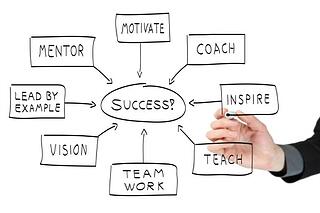
The Difference between CEOs That Manage vs. Lead
Fri, May 3, 2013 — Today's blog is by guest blogger Kevin Dincher.
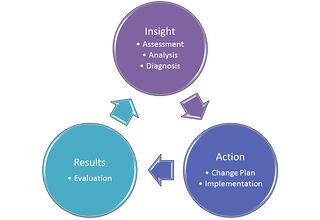
Cracking the Code of Organizational Change
Sun, Mar 10, 2013 — It was 1996 when John Kotter first published Leading Change and told us that 70% of all major change efforts by businesses fail. Nearly two decades later there is little evidence that any improvement has occurred, and this 70% failure rate has become axiomatic in business development and change management circles. Despite some individual successes, change remains difficult—and few companies manage change successfully. Organization change is a strategic imperative in today’s fast-paced business environment. Unfortunately, in the pursuit of change and trying to be the best, CEO’s and their executive team frequently chase after the latest and greatest idea. They lose focus and become mesmerized by all the advice available in print and online about why companies should change, what they should try to accomplish, and how they should do it. This proliferation of recommendations often leads to failure. Cracking the Code of Change

5 Super Tips for a CEO Faced with a Media Interview
Wed, Mar 6, 2013 —

Their Pain, Your Gain
Sat, Feb 23, 2013 — Some of your best customers would probably like you to do business with them in a different manner. Maybe it’s the day you deliver your goods to them? The minimums required? Maybe it’s the day of the month that you do your billing…or the amount of paperwork that you require of them? Instead of making doing business with you easier, do you sometimes make it a bit more challenging? Successful companies seek out their customers’ pain points and eliminate them. Constantly listening to the signals from the marketplace can help you see the storm clouds gathering, and to develop the strategies necessary to meet them. In order to do that, you really need to dig deep and find out what is bothering them, and how you can go about fixing those things. Define the Pain Point