.png?width=1500&height=398&name=CO_Corporate%20Logo%202021_4C_HOR_FNL-1%20(1).png)

The CEO Dashboard Should Show Direction, Not Just Activity
If your dashboard only tells you what happened, it’s reporting history. A CEO needs direction.
Steps Taken Aren’t the Same as Direction
I've spent a fair amount of time backpacking, and one thing becomes obvious when you've been walking for several hours: knowing how far you've walked isn't the same thing as knowing whether you're headed in the right direction.
Your watch can tell you that you've taken 22,000 steps.
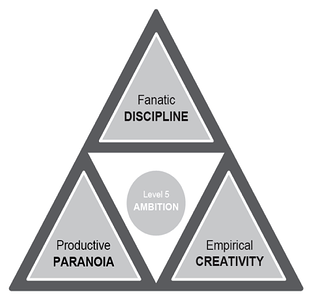
9 Disciplines to Activate Collins’ 20-Mile March
Wed, Jul 25, 2012 — Discipline is Good, Right? In Jim Collins’ “Great By Choice” this pyramid model provides a framework for his trilogy-logical discussion. I’ve read this book wearing two lenses – one, as a principal in our firm, and two as a marketing executive. As a business leader, I aspire to a higher level of discipline in my leadership as well within my personal work ethic. As a marketer, I recognize – primarily from the past 10 years of expanding digitally-dominated marketing and dynamic market ecosystems – that discipline is indeed the capstone of success. Goes Against My Instincts The 20 Mile March is “Jim Collins code” for consistent, methodical and metered execution. He correctly calls it out as a choice or decision, even a strategy, for securing sustained growth. The argument goes against several mantras ingrained within me – “strike while the iron’s hot” “leverage your opportunities” “capture the moment”. No, instead, his research observed that companies win (and south pole explorers survive) when they meter their progress. How might this apply to our business at Chief Outsiders? Perhaps we should add one new major market a year to our firm, regardless of the market conditions. If it’s a tough year, we add one new market. If the economy is rocking and highly favorable, we still add only one new market. Collins’ research tells us the benefits of steady pace outweigh the opportunistic instinct to lunge ahead in good times or hunker down in tough times.