.png?width=1500&height=398&name=CO_Corporate%20Logo%202021_4C_HOR_FNL-1%20(1).png)
Silicon Valley to Space Tech: How One CEO Found Growth Through Adaptation


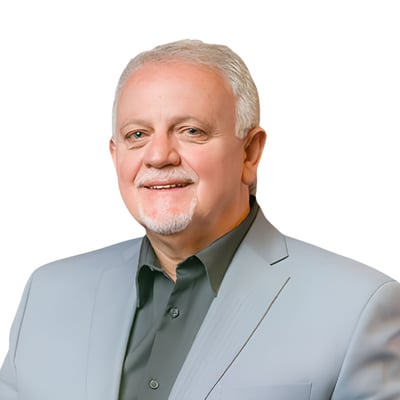
From a podcast interview featuring Ed Trevis, President, CEO, and Co-founder of Corvalent Corporation
Overview
In this episode of CEO Growth Talks, host Pete Hayes speaks with Ed Trevis, President, CEO, and Co-founder of Corvalent Corporation. Ed shares the remarkable 32-year journey of his company from its Silicon Valley roots to becoming a key player in Texas’ growing tech and manufacturing ecosystem. Driven by a culture of consistency, Ed built Corvalent to deliver rugged, industrial-grade computing systems designed for long-term reliability and mission-critical environments.
As the company evolved, Ed embraced innovation through IoT and AI, developing full turnkey solutions for monitoring, tracking, and control across smart cities, energy, and defense sectors. His commitment to long-life production cycles not only enhances data integrity but also supports sectors that demand long-term system stability. Now, as a member of the Texas Spaceport Commission, Ed is helping shape the future of space tech and economic development in Central Texas.
Key Takeaways
-
Industrial success requires long-term reliability, not just cutting-edge innovation.
-
IoT and AI are transforming preventive maintenance, smart cities, and mission-critical systems.
-
Texas is emerging as a top destination for manufacturing, aerospace, and tech innovation.
-
Longevity in system design enhances data integrity, vital for AI-powered operations.
-
Ed’s leadership in the Spaceport Commission supports tech-driven economic growth in Texas.
Follow Ed Trevis on LinkedIn
Follow Pete Hayes on LinkedIn
[Episode Transcript]
[00:00:00] Pete Hayes: Hey everyone. Welcome back to CEO Growth Talks. I'm your host, Pete Hayes, and I am thrilled to introduce and welcome Ed Trevis:, the President, CEO, and Co-founder of Corvalent Corporation. We're going to hear all about that. Everybody loves to hear about what technology companies, especially in the Greater Austin area, are doing well. Ed is right in the middle of that. To take things a little further, we always love to talk about AI on this program, and we will do that today. We'll talk about the Internet of Things, and we're going to talk about Ed's new appointment to the Spaceport Commission in Central Texas.
[00:00:38] Pete Hayes: Of course, if you know what's going on in Texas, it's absolutely a hot spot in the country for space programs like SpaceX and Firefly, so we'll talk about that a little bit. Anyway, welcome, Ed.
[00:00:50] Ed Trevis:: Thanks for having me.
[00:00:51] Pete Hayes: I'm going to give a little bit more shoutout, and we want to hear your story because you started out as a Silicon Valley company, but for some reason, you came to Texas and you've been a high-growth company.
[00:01:02] Pete Hayes: I think earlier you said you're a three-year-old startup, which is interesting. But why the transition to the Austin area, and what has that done for your business?
[00:01:12] Ed Trevis:: Well, we stayed in California for about 15 years prior to moving to Texas. So we're a 32-year-old company. When we started in California, we didn't start as a company that had venture capital.
[00:01:24] Ed Trevis:: We didn't even have a business plan when we first started this thing. I used to be in this industry prior to that, in a different company. So I started pretty much with a vision and a lot of grit in the beginning. I had to work hard to actually start this. In the beginning, we had a couple of very large customers at another company, and I asked them to prepay for some critical products they needed from us. So I started by licensing a product from the old company and manufacturing this product for these customers.
[00:01:53] Ed Trevis:: They were nice enough to actually do that for me, which created enough margin at the time for me to invest in the business and really hire the key personnel that we needed to build the infrastructure required to produce the product and the support that would become our core technology and core niche.
[00:02:14] Ed Trevis:: This was a pivotal moment for us in the beginning. Back in 2007, we started having some real issues with hiring key personnel in technology. One of the issues I had every time we did interviews with engineers, technical personnel, and industry experts from different states, was that everybody would start laughing at me.
[00:02:37] Ed Trevis:: They would go, "Are you kidding me? I'm not going to leave Austin or leave Oregon or leave Florida to go live in Silicon Valley in a small apartment and put my kids through public school. I mean, put my kids into private school rather than public schools and stuff like that. I don’t care how much you pay me, I won’t go."
[00:02:57] Ed Trevis:: So one of the pivotal moments for us was deciding to move to where they are. We started looking at eight different states and started talking to eight different state economic development groups.
[00:03:11] Ed Trevis:: And we suddenly realized that being in Austin, Texas, was the number one choice. A key moment was when we had a visit from Texas, which we didn’t get from any other state, trying to lure us to come to Texas. That proved to me that it was a really interesting scenario, because three different cities came to the same meeting even though they compete with each other. I looked at them and said, “You guys are competing with each other. Why are you here altogether?” And they said, “We don’t care what city you choose, as long as you’re coming to Texas.”
[00:03:47] Ed Trevis:: That alone, for me... yes, that moment by itself felt like a done deal.
[00:03:52] Pete Hayes: And you got here, and the governor comes and welcomes you. What was that all about?
[00:03:56] Ed Trevis:: Yeah, so Rick Perry was the governor at the time. Soon after we moved here, he came to talk about some political issues. We were one of the first pioneers of this movement from Silicon Valley to Austin. For them, it was a big win to start with, especially for Cedar Park in the north of Austin. For them, it was a big win.
[00:04:20] Ed Trevis:: So the governor found the opportunity to come here. As a matter of fact, in my speech that day, I promoted the slogan for Texas called Texas Works, because it really is what Texas is all about. He bought the copyright for that slogan, and I think he still uses it today to promote economic development throughout the world. It was a big thing. He came in a couple of times. We had different senators come in here. I think we were just one big example of going from a state that is not necessarily anti-business, but is definitely not as pro-business as Texas is.
[00:04:57] Ed Trevis:: I believe the Texas government does something really interesting. I always say that the Texas government enables companies rather than rules them. I think that’s something most people appreciate. And when I say enable, I’m talking about the tax structure and the whole system of support they provide to help businesses thrive in this state.
[00:05:19] Ed Trevis:: So all of that has been a major experience for us in the last 15 or 16 years that we've been here.
[00:05:26] Pete Hayes: Wow. Now we need to back up just a little bit, because you got here and then, in more recent years, your business has shifted. We haven’t actually even described what you do. So maybe you can tell us what you’ve been traditionally known for, and then how you’ve pivoted into a much richer kind of solution area.
[00:05:44] Ed Trevis:: Yeah, exactly. Over the years, especially in the first six or seven years that we were here, we realized that the industries were shifting into Internet of Things. That was one of the things that happened to us. Hardware alone was not enough for an IoT implementation. Software was needed as well.
[00:06:07] Pete Hayes: You build systems. Systems on boards that get used in manufacturing, in healthcare. So you've been a system-on-a-board provider. Is that fair?
[00:06:19] Ed Trevis:: Okay. So Corvalent has been a company that has developed board-level products, specifically what we call x86 Intel board-level products, since the beginning.
[00:06:29] Ed Trevis:: Then we transitioned into system-level products, which has been the majority of our business for many, many years. We produce systems, industrial systems, and industrial computers that are more ruggedized and built for longevity in the industrial capital equipment industry.
[00:06:46] Ed Trevis:: So if you take, for example, a medical piece of equipment, a defense piece of equipment, or a semiconductor piece of equipment, they cannot use your typical commercial computers that you can buy off the shelf anywhere.
[00:07:00] Ed Trevis:: They have to buy a computer that is, number one, a little bit more ruggedized, designed for longevity, and guaranteed to be produced for 10 to 15 years with no changes. That’s our niche. So, besides being a white-glove support kind of company, we build a product that saves companies millions of dollars.
[00:07:20] Pete Hayes: Right. Okay. And now, so that's your history, and now you've more recently had to expand upon your offering. And I know Internet of Things is just becoming bigger and bigger. I know AI is becoming bigger and bigger for you. So how is that all coming together for your customer?
[00:07:37] Ed Trevis:: So back in the early 2000s, many companies started the Internet of Things revolution. You know, part of the Industrial Revolution, what I call it. And then came AI. But with the industrial revolution of IoT, we kept watching what was going on in the industry. And one of the things that we realized was that the industrial environment needed a software product, not just hardware, because there were three pillars of IoT, which are monitoring, tracking, and control.
[00:08:05] Ed Trevis:: For many years, we produced hardware for controlling systems. So in other words, customers had a software that controlled that piece of machinery. Now they need something to monitor the health of that piece of machine, and they need to track where the machine or track where the vehicle or whatever industrial piece of equipment was in the world.
[00:08:26] Ed Trevis:: So back in 2018, we decided to get into 2018, 2019. We started thinking about getting into the IoT software industry. So we built this dashboard, IoT, primarily for preventive and predictive maintenance of the existing customers of ours. Then we discovered another ten segments in our industry besides the twelve that we were already in.
[00:08:48] Ed Trevis:: Like smart building and smart cities and smart manufacturing and smart energy and some others that we believe the product was actually fitted for. And then our hardware was complementary to that whole implementation. And that's what we do. We are like a full turnkey, one-stop shop IoT implementation for monitoring, tracking, and control.
[00:09:12] Pete Hayes: Okay. All right. And the business has been doing well. How do you stay innovative? How do you go about that? How do you instill that in your leadership and how do you lead that way?
[00:09:23] Ed Trevis:: Well, it's a balanced equilibrium between what we do best, which is the longevity and consistency as our culture in designing and producing products, and staying on top of breakthrough technology. And then, in terms of new technology that needs to be launched for something and then produced for 10 to 15 years, which one would think, who would buy this for 10 to 15 years if technology advances so much?
[00:09:53] Ed Trevis:: But you gotta understand that the niche of the industry is, number one, an industry that likes to buy products that are extremely consistent for that many years because they're highly controlled or certified by different things like FDA, and in the semiconductor industry, it's called Copy Exact. So they cannot change a single screw in a piece of equipment, and they spend sometimes hundreds or even millions of dollars on revalidation, recertification, and so forth.
[00:10:23] Ed Trevis:: So we had to find a balance of doing the latest technologies and continuing to produce that for so many years, and that's the niche of our industry. The other thing, part of our culture as far as longevity and consistency, is that we believe that the more consistent and the more long life in production you're doing with products, the fewer products you would have in the field, and the fewer problems you would have in the field.
[00:10:49] Ed Trevis:: Over 32 years, we have statistically realized with our customers that the more consistent you are with products in the field, the fewer problems you're going to have technologically speaking.
[00:11:02] Pete Hayes: Wow. So longevity and consistency for customers. It's not like an iPhone issue every year where you just can't wait to get the next one and replace it. They need that stability. They need that. They need to count on it.
[00:11:16] Ed Trevis:: Yeah. And that's valid for other industries that are not necessarily in the industrial capital equipment industry, per se.
[00:11:23] Ed Trevis:: I believe it's everywhere, especially right now where data integrity is one of the pillars and most important things in the world that we're going to start living in right now, which is artificial intelligence. The more you're changing hardware, you sacrifice that integrity.
[00:11:39] Ed Trevis:: And I think that's one of the things that I think our concept and our ideology of longevity and consistency really applies to what's happening in the world today in terms of data integrity. You know?
[00:11:52] Pete Hayes: Mm-hmm. Well, you have a reputation of being in the thick of industrial electronics, industrial systems. Here you are in Central Texas, and now you've been tapped for something that just sounds crazy to some of us. Even though we know SpaceX is headquartered now in Texas. But when we think of a Spaceport Commission, a Spaceport Board that is getting together to help ensure that it's attracting the right industries, it's working well with government agencies—basically building whole new industry capabilities within various parts of Texas. Am I getting this right? You need to tell us more.
[00:12:39] Ed Trevis:: Yeah. So, you know, there's currently, I believe, four different commissions in the state of Texas that the governor has implemented here in the state of Texas.
[00:12:50] Ed Trevis:: I think there's four different ones, and there's a few actually around the country. But with Space Force, when it was actually implemented about four or five years ago, and all the advancements in technologies—for example, with SpaceX and NASA becoming a big focus for the federal government in speeding up the technology in aerospace—
[00:13:13] Ed Trevis:: I think a lot of that has really become a big priority for the United States for several reasons. Not only technology speaking, but also for national security. And I think that's one of the reasons the governor of Texas decided to implement these commissions. And because of our involvement with some of the aerospace companies and subcontractors for the military and so forth, and some of the aerospace companies like NASA and some of the customers that we have, I was chosen to be part of that committee.
[00:13:45] Ed Trevis:: I'm very honored to be part of that and very humbled to be part of that, because it's one of the things that I do have some initiatives around. I like to bring more of that technology. One of the big elements of the aerospace or the Spaceport Commission is really economic development. It's actually bringing companies to Central Texas or to Texas overall that are related to aerospace, but also related to other technologies that are congruent with aerospace technology, which is artificial intelligence, IoT, and some of the things that we're actually looking at as we move forward. Right?
[00:14:22] Pete Hayes: Do you have a sense for what's larger—the defense component? It seems like NASA has done a wonderful dance in helping to privatize space. Where do you think the greater opportunity is for industrial organizations—defense benefit, or just general business, if that's even an appropriate description?
[00:14:44] Ed Trevis:: Yeah, I would say more in the general business, in general world needs, per se. You take remote areas, for example, in need of internet connection and in connection to the world with artificial intelligence and everything else that’s going on with IoT.
[00:15:00] Ed Trevis:: Like, for example, one of the things that is an explosion of that industrial revolution, as that's, per se, that's happening today, is the IoT world. Sensors became a more affordable product to buy, and that whole connectivity with, for example, take smart cities as an example, the whole amount of broadband and bandwidth that you're going to have, or you're going to need in the future, is really going to rely on space technology.
[00:15:30] Ed Trevis:: Companies like Starlink, and all the satellites that you have close to Earth, that we can put together close to Earth these days by companies like Firefly and SpaceX and so forth. I think those are more in need than defense itself.
[00:15:45] Ed Trevis:: I think defense would be obviously a project on its own, but I think they are going to take advantage of a lot of the technologies developed in the United States. I think it is just a byproduct of what is happening in the world, as far as business is concerned. Yeah.
[00:16:03] Pete Hayes: Wow. You mentioned a recent trip to Brazil where you saw an implementation that you said, here is an example of what we might need, even in Williamson County. Describe what you ran into.
[00:16:17] Ed Trevis:: I had a wonderful time actually going to a smart city expo down in Brazil. One of the things I realized was that I had to go to another city to visit a city called São José dos Campos. That’s located in São Paulo, the most industrial city in Brazil, which is responsible for 34% of the Brazilian GDP. That city alone became a very smart city, and they have a 2 million square foot technology park.
[00:16:44] Ed Trevis:: This is where all kinds of technology advancements are happening. Companies like Embraer, the third-largest aircraft manufacturer in the world, are located there doing all kinds of developments in collaboration with
[00:17:00] Ed Trevis:: different universities, state governments, city governments, and the federal government.
[00:17:03] Ed Trevis:: They are doing all kinds of work. So I saw an absolutely impressive technology park, 2 million square feet with all kinds of infrastructure. I looked at that and thought, we do have technology parks in the United States, in places like North Carolina and so forth, but we don't have anything quite like that.
[00:17:23] Ed Trevis:: One of the things I thought about with this commission is to take the initiative to create one right here in Central Texas and see if we can develop a technology park of that magnitude. I became friends with them, and I think we have the roadmap for constructing something like that to start small, but I think it could develop into a very large enterprise in Central Texas and become the hub of aerospace and artificial intelligence technology.
[00:17:53] Pete Hayes: Wow. So how do you compare? You probably know Bob Metcalfe, who moved from the Valley to Texas.
[00:18:00] Pete Hayes: He has been a big proponent. By the way, everyone, he invented Ethernet when he was at Xerox PARC back in the day, where they were inventing things like the mouse and other technologies. Bob has always been a thought leader. He came to Texas, and I remember tweeting with him once. He said, "Yeah, Austin is the next Silicon Valley." I said, "Bob, no, we don't want to be Silicon Valley. We want to be Austin." We want a lot of tech, but what is your take on the difference between the two environments?
[00:18:33] Ed Trevis:: I think that Silicon Valley deserves a lot of credit for innovative technology, but I think there is a major shift, and it is not just to Austin.
[00:18:42] Ed Trevis:: I think there is a broader shift around the country in different places. Silicon Valley is still an innovative area because of the major players there, but we are starting to see movement in large companies and institutions that are coming here and
[00:19:00] Ed Trevis:: finding real incentive to grow and propagate technology like we are doing here.
[00:19:00] Ed Trevis:: You also have companies from around the world looking at Austin for different reasons, including what I mentioned earlier, like how the government of Texas enables rather than restricts.
[00:19:13] Ed Trevis:: You have a different environment here. You really do. And there is a different geopolitical environment in the world today that makes Texas a very desirable destination for technology, manufacturing, and other industries.
[00:19:36] Ed Trevis:: We are trying to bring manufacturing back to the United States after 30 or 40 years of decline. As a company that has been producing in the U.S. for 32 years, I believe it is about time.
[00:19:57] Ed Trevis:: We have always believed in making our products in the United States, and we are going to continue doing that.
[00:20:00] Ed Trevis:: I believe we are going to become a major hub. Our proximity to Mexico, our proximity to other U.S. states, and our central location in the country all contribute, and our diversity too—across energy, technology, agriculture, and tourism—I think all of that really sets us apart from Silicon Valley.
[00:20:27] Pete Hayes: It really does. I think of space technology as being fundamentally different from silicon technologies. It is an interesting area. What is your perspective on the space industry as a whole?
[00:20:43] Ed Trevis:: As far as space is concerned, I am not an expert, but I can say this. Everything we are doing with artificial intelligence, including AI agents that improve operational efficiency, speed up decision-making, and make business systems more intelligent, adaptive, and autonomous.
[00:21:12] Ed Trevis:: You are seeing how critical space technology has become, because the ground infrastructure is not strong enough. There is no better solution down here than what we are seeing in space. We now have satellites orbiting much closer to Earth than ever before. This space technology is making a huge difference in how we execute as we move forward as human beings.
[00:21:48] Pete Hayes: It really expands and changes the possibilities. It feels like we are just getting started. One of my favorite things is looking at the SpaceX
[00:22:00] Pete Hayes: map showing tens of thousands of satellites out there.
[00:22:05] Ed Trevis:: It is incredible.
[00:22:07] Pete Hayes: It looks like science fiction, but it is real. And it works. And it is reliably functional, right?
[00:22:13] Ed Trevis:: Yeah, very reliable. It is extremely powerful. With ongoing improvements in battery technology and energy systems, we are going to be able to support these satellites much longer than before. I just worry about the traffic up there. There are so many satellites being launched now. It is absolutely amazing.
[00:22:37] Pete Hayes: As they get smarter, they will manage it. This has been so much fun, Ed.
[00:22:43] Pete Hayes: You have so much to offer. You really understand what is going on. You run an impressive business. I am thrilled the Spaceport group selected you to be part of their inaugural visionary team for what is happening in Central Texas. That is seriously exciting.
[00:23:02] Ed Trevis:: I am very excited. Some of the members involved are incredibly impressive. We have people from UT, people from Firefly, and others from around the country.
[00:23:19] Ed Trevis:: I am going to learn a lot about the space industry, which is fantastic. My focus, as always, is technology and driving economic development for Central Texas and Texas overall.
[00:23:33] Ed Trevis:: That is the reason I am doing this. I have real experience in economic development in Texas, and I believe I can help newcomers and companies come here and experience what we have.
[00:23:52] Pete Hayes: That is fantastic. Thank you for joining us today, Ed.
[00:24:00] Pete Hayes: And thank you, everyone, for tuning in. We will see you next time on CEO Growth Talks.
Topics: Business Leadership and Strategy, Industrial, ceo growth talks
Jun 26, 2025, 9:00:00 AMFeatured Chief Outsider
/CMO-Pete-Hayes.jpg?width=200&height=200&name=CMO-Pete-Hayes.jpg)