.png?width=1500&height=398&name=CO_Corporate%20Logo%202021_4C_HOR_FNL-1%20(1).png)

The Contrarian Brand Play: Why Right Now Is the Best Time to Invest in Brand
Part 4 of our four-part series on the evolving AI search landscape and what B2B leaders need to know to stay competitive.
The Rise and Fall of Executives
Wed, Jul 24, 2013 — This blog is written by guest blogger Per Ohstrom. In my years in business, I have noticed how top executives often come out of Operations, which is a little counter- intuitive considering the number of highly trained Finance, Marketing or R&D managers there are in organizations. I have also seen execs crash and burn, who used to be well performing in a functional role. What’s going on? In a report from the Chally Group “Why Global Leaders Succeed and Fail”, published by Right Management, the researchers share some interesting findings.

Marketing Budget: How much should a CEO spend?
Wed, Jul 17, 2013 — How much sould a CEO spend on a marketing budget? Whether or not it is the first question asked, it is usually one of the first questions a CEO thinks about when discussing his or her marketing efforts: how much should I spend on a marketing budget? Well, the average company spent 10.4% of its revenue on marketing in 2012. And according to Gartner, that marketing budget is scheduled to go up by 6% in 2013. Now this includes salaries of the marketing people, but it doesn’t include things like software licenses or servers for the data. And this spend widely varies for the types of companies from IT at 3.5% to over 12% for media companies.

Five Marketing Lessons to Learn from Jimmy Buffett
Sun, Jul 14, 2013 — Friends asked my husband and me to join them for a Jimmy Buffett concert recently near Dallas, Texas. Never in our wildest dreams did we think that over a span of a few hours we would escape to a tropical venue where we would be entertained while learning marketing tips from a barefoot guitarist on a stage singing about margaritas, cheeseburgers and shark fins. Jimmy Buffett’s brand, inspired by his lyrics and lifestyle, has taken on a life of its own. I made it my mission to find out what Jimmy Buffett has done so right to grow a loyal fan base comprised of all sizes, shapes, ages and social economic classes. What I discovered during the course of observation and investigation, are the following five marketing tips. 1. Focus your strategy on a niche that plays to your strengths. 2. Build a brand that leaves a visual image in the mind of the customer. 3. Engage and listen to your target audience to grow loyal followers. 4. Establish partnerships that stay true to and enrich your brand. 5. Give back to the community in a way that complements your brand. Keep reading if you want to know how these tips worked for Jimmy Buffett and how they can work for you.
Seven Considerations in Evaluating your Marketing and Sales Process
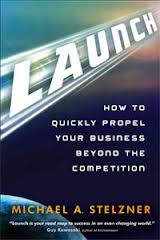
Sun, Jun 23, 2013 — I just finished reading several books that come at the changes in the marketing and sales process from different perspectives. Launch by Michael Stelzner, discusses how to use social media to grow your brand and your business. It includes some very pragmatic tools and examples for the marketing crowd. I highly recommend it as a primer for anyone interested in how to optimize their social media efforts. Sales Shift by Frank Belzer presents how the buying process has changed and how it will continue to evolve. Of particular interest is Belzer’s discussion of why sales skills that have worked in the past will no longer be effective going forward. When considering the combination of these two perspectives, the transformation of the commercialization process is significant.

5 Ways to Maximize Business Value for Selling a Business
Wed, Jun 19, 2013 — Today's blog is by guest blogger, Curt Cyliax. How can you boost your company’s short-term earnings while maximizing long-term value? After managing the purchase and sale of a number of companies, we’ve identified five primary drivers to maximize business value. If you’re a business owner who plans on selling a business or transfering your company in the future, you’ll want to know how you can maximize the value of your business, make it more attractive to potential buyers, and get top dollar for your business.

6 Ways Mobile Wallets Can Reshape Your Customer's Experience
Wed, Jun 12, 2013 — This blog elaborates on Richard Browne’s article in CSP Magazine entitled, 'Future-Proofing Your New Site.' The mobile wallet revolution is poised to happen over the next 12 months. Besides the major branded entrants like Square, Google, PayPal and ISIS, there are now over a hundred other mobile wallets announced or in service. The mobile wallet has the potential to reshape your business; here are six benefits that create opportunities for you to improve your customers’ experience.

Hire Slow and Fire Fast Part I
Sat, Jun 8, 2013 — Today's blog is by guest blogger Kevin Dincher. 25 years ago as a new manager, I had to fire an employee for the first time. When I inherited her, she was a long-time employee with a lengthy history of poor quality work, low productivity, negativity and troublesome relationships. Firing her was drawn-out and excruciating—but I learned early on the importance of hiring the right people—and not hanging on to the wrong ones.

Quid Pro Quo? Or Quid Pro NO? Discounting Can Be Dangerous!
Wed, Jun 5, 2013 — What is "Quid Pro Quo? Wikipedia defines it as an exchange of goods or services, where one transfer is contingent upon the other. Phrases with similar meaning include: "give and take", "tit for tat", and "you scratch my back, and I'll scratch yours." Recently, I have been involved in several discussions with CEOs on charging for their goods and services. The discussions weren’t concerning the actual price for the services, but the ultimate cost between the buyer and the seller. Let’s share some examples. (with the names changed to protect the innocent or, in some of these cases, guilty parties) The Stories One CEO—I will call him Joe—runs an executive consulting firm. He had a problem with a leak in his house. He needed immediate help and called one of his clients Sam, who is the owner of a construction company. Sam immediately sent someone out to fix the leak but didn’t send Joe a bill. When Joe asked him about it, Sam responded, “No problem. You’re a friend. Don’t worry about it.” Adele owns a restaurant in town. Bill, an influential colleague held several events there but has been ignoring the bills Adele has sent. The amounts are significant. Adele is worried about pressing Bill too hard as he could possibly react strongly and hurt her restaurant business. Bill has been referring business to her. Tim is the CEO of a local accounting firm. The firm needed a new website. He contacted Rachel who owns a website design firm, and they discussed a cost-effective approach to building the site. They decided to exchange professional services rather than money, so he is now taking care of her accounting and she is taking care of his website. Any of these sound familiar? Have you encountered any similar situations? For a another perspective on this, read this legal blog.

5 Steps to Building Customer Service into your Company's DNA
Wed, May 15, 2013 — This is an updated version of an article published in Yahoo Voices by Barbara Fowler, CMO and partner at Chief Outsiders "Make new Friends but Keep the Old Ones" True for Customers too. Positive customer service experiences are the key to building and maintaining a business. Multiple studies have repeatedly concluded that gaining new customers is much more difficult than keeping your current customers. A delicate balance must be kept between actions that go above and beyond in retaining customers and actions that focus on immediate costs or promote profitability for an organization. Just as important as this balance is the integration of a high quality customer service approach or mindset throughout all departments of a business.