.png?width=1500&height=398&name=CO_Corporate%20Logo%202021_4C_HOR_FNL-1%20(1).png)

Go-To-Market Cultural Alignment: The Invisible Variable in U.S. Expansion
Many companies that find success outside the United States have one thing in common: the need to succeed in the U.S. market.
That is not complicated or surprising. The United States is the largest economy in the world and, in many categories, the single biggest available market. World Bank data clearly shows the scale of the U.S. economy relative to most global markets. For companies in high-tech, scientific, medical, industrial, and systems integration sectors, the U.S. is not just attractive. It is strategic.
Company leaders want to grow. The U.S. is where they look. They are not wrong.

International growth: A balance of competencies
Sun, Mar 3, 2013 — Our blog today is by guest blogger Mark Buss.

Their Pain, Your Gain
Sat, Feb 23, 2013 — Some of your best customers would probably like you to do business with them in a different manner. Maybe it’s the day you deliver your goods to them? The minimums required? Maybe it’s the day of the month that you do your billing…or the amount of paperwork that you require of them? Instead of making doing business with you easier, do you sometimes make it a bit more challenging? Successful companies seek out their customers’ pain points and eliminate them. Constantly listening to the signals from the marketplace can help you see the storm clouds gathering, and to develop the strategies necessary to meet them. In order to do that, you really need to dig deep and find out what is bothering them, and how you can go about fixing those things. Define the Pain Point

D.A.R.E. to Grow
Wed, Feb 20, 2013 — Sometimes it is difficult for our organizations to take the steps necessary to grow – to change – to leave what is comfortable and strive for something more. We stop ourselves with questions like: How will my organization adapt to the changes? Can we handle the new challenges? Do we have the skills required to meet the new demands? Why should we upset what is already going well? It makes perfect sense for us to question. In fact, we wouldn’t be doing our jobs as leaders if we didn’t. At some point though, if we want to move forward, we must also move beyond the questions. We must take our own dare, if you will – and D.A.R.E. to grow. Here are some thoughts to get us started. D = Discover

Hold ‘em: Three M's of Success for CEOs
Sun, Feb 17, 2013 — If you are a start-up or a small business, you probably have more on your plate than a reasonable person can be expected to handle. Or at least handle in an effective way without going insane. So what should a small business leader focus on? How should you identify the really important ones from those that are merely, well, important?

The Four Basic Pillars of Digital Economics
Sat, Feb 16, 2013 — For many companies in both the B2C and B2B markets, selling online is a must. Whether selling digital goods like downloadable software, SaaS-model subscription offerings or actual physical goods, in my experience there are a few straight forward and basic economic pillars of selling online that are often overlooked. While your products, pricing and promotions are important, I’ve seen that a renewed focus on the intersection of these four pillars delivers significant increases in sales. These pillars are: • Traffic • Close rate • Average order value (AOV) • Retention

The Welcomer Edge: The Secrets to Repeat Business
Sun, Feb 10, 2013 — Today's Chief Outsider blog is by guest blogger Diana Kyser McNeff. I recently had the opportunity to sit down and talk to Richard Shapiro, founder and president of The Center For Client Retention and author of his recently published book “The Welcomer Edge – Unlocking the Secrets to Repeat Business”. Since 1988, Richard has been running The Center For Client Retention (TCFCR) which provides research, training and consulting to Fortune 500 companies on how to improve the customer experience. Before founding TCFCR, Richard held leadership positions at ADP (Automatic Data Processing) in Client Services, Client Satisfaction and Client Retention. At ADP, he developed the idea that when there is a gap between service expectations and delivery, the client relationship is most vulnerable —a customer is most likely to move to a competitor. Richard also credits his experience working in his father’s haberdashery store as a boy as the place where he learned the true value of a customer.
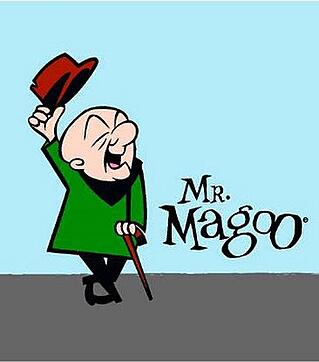
The "Unconscious Incompetent" or Don't Be "Mr. Magoo"
Tue, Jan 1, 2013 — Do you remember Mr. Magoo? He was a cartoon character who used to cause disasters all around him and be totally unaware of them. Cars would overturn, store aisles would collapse, boats would crash and Mr. Magoo bumbled on his way, oblivious to it all. Some US business people act the same way when starting an international arm to their business.

Customer Satisfaction Survey Questions: The Cardinal Rule to Know
Sun, Dec 23, 2012 — While working with an executive management team on customer satisfaction survey questions, they told me every survey seemed to have declining response rates. They asked me what I thought about just asking one question: “On a scale of zero to 10, how likely is it that you would recommend our company to your friends and colleagues?” My response: Have you looked into the possible reasons why the customer survey response rates are declining? Too often I’ve seen companies want to ask the would-you- recommend-us question without doing enough follow-up to understand what it is they are doing right or wrong. This is where CEOs need to lead their companies and improve.

3 Ways to Drive Innovation – a CEO’s Perspective
Sun, Dec 16, 2012 — What makes some companies more successful than others? And what role does innovation play in this? I have always been fascinated by this topic, especially if the business is facing a turn-around situation.