.png?width=1500&height=398&name=CO_Corporate%20Logo%202021_4C_HOR_FNL-1%20(1).png)

Go-To-Market Cultural Alignment: The Invisible Variable in U.S. Expansion
Many companies that find success outside the United States have one thing in common: the need to succeed in the U.S. market.
That is not complicated or surprising. The United States is the largest economy in the world and, in many categories, the single biggest available market. World Bank data clearly shows the scale of the U.S. economy relative to most global markets. For companies in high-tech, scientific, medical, industrial, and systems integration sectors, the U.S. is not just attractive. It is strategic.
Company leaders want to grow. The U.S. is where they look. They are not wrong.

Making our Mistakes Pay – Rather than Paying for our Mistakes
Sun, Dec 9, 2012 — No one likes making mistakes, but we all make our fair share of them. Humans are fallible, products and processes fail, and things slip through the cracks. Even the best-managed companies can go awry. Unfortunately, mistakes are not only inevitable; they can also be very costly. As a CEO you know that mistakes can cause operations costs to rise and productivity to falter—and most damaging of all, they frustrate our customers so that they start thinking about taking their business elsewhere. If we act quickly to fix our mistakes, however, we can make our mistake pay off. Losing and replacing customers is expensive. 91% of unhappy customers will not willingly do business with us again (Source: U.S. Office of Consumer Affairs). If they have the option, they will take their business elsewhere. When customers leave us, we need to expend resources getting new ones—and it generally costs a great deal more to get a new customer than to keep an existing one. Think of the difference in the time, effort and money that goes into marketing and sales to bring in new business compared with how little effort it takes to stay connected with a customer you already have. Losing and replacing customers is expensive.

Your Brand and the Buyers Journey: Why CEOs Need to Pay Attention
Wed, Dec 5, 2012 —

6 Ways to Turn Customers into Advocates with a Brand Ambassador Program
Sun, Dec 2, 2012 — Harley Davidson, Intel, Starbucks, Apple. We all know brands that have a loyal group of customers, brand ambassadors, who love to talk about the brand and recommend them to their friends and peers. And these recommendations drive sales. According to the Boston Consulting Group, 9 out of 10 consumers and over 50% of B2B customers trust recommendations from friends, colleagues and peers when making their purchasing decisions. You can invest lots of money in marketing campaigns, but for many companies the most powerful sales driver is a recommendation from a brand ambassador. And a strategic brand ambassador program may be the difference-maker in your bottom line.

"Cake Boss" Carlo’s Bakery now offers truly sweet experience.
Wed, Nov 28, 2012 — Diana Kyser McNeff is our guest blog author this week 100 Year Old Bakery Uses 21st Century Cloud and Social Technology to Improve its Customer Experience and Expand its Business.

Latino Marketing 101: “Niche” Rhymes with “Rich”
Wed, Nov 28, 2012 — Latinos Made a Difference Election night, as the race was called for Obama, the analysts for each network credited the Latino vote as the most nationally-decisive block. Subsequent data revealed a 70+ to 23 margin that voted with a clear preference for the platform and party that actually considered the wants and needs of Hispanics and reflected them. And like the Republicans, many brands in this country continue to either eschew or sub-optimize effective marketing aimed at the so-called “niche” of 50+ million Hispanics voting every day in America with their wallets. Usually I have found that my clients were either ill-informed about the marketing potential of this segment (comprising 16.7% of the U.S. population), or they felt that they could get by dabbling in it or just doing just a little Spanish language advertising, even though they were superficially spending at levels far below what was commensurate with the size of the segment and the reality of the opportunity. Most clients that I have introduced to effective Hispanic marketing have had a very quick epiphany as they moved from initially testing the waters to subsequently investing aggressively and stealing market share hand over foot over lazy, condescending or less savvy competitors. Then they are delighted as they learn that Hispanic customers tend to be far more brand loyal and difficult to dislodge than general market consumers, once brand preferences are developed. Do the Research

The CEO Is the Chief Team Builder
Tue, Nov 27, 2012 — The concept of team building has been around since the 1960s and continues to multiply as CEOs increasingly embrace developing people and teams as an indicator of their own leadership success. But, to be successful, effective team development for a CEO requires knowing when to do team building—and when not to do team building. I’ve seen CEOs insist on referring to their employees as a team and have pointed to how well their employees get along with one another as the metric of their effectiveness as a team. Calling a group of employees a team doesn’t make them a team, no matter how well they get along. They may just be a group of workers who really like one another—or at least have learned to pretend to like one another. When does a “Group” become a “Team”?

The Best Customer Service Uses Ritz-Carlton Radar On, Antenna Up Model
Sun, Nov 25, 2012 — Does your company offer the best customer service? Most every company claims to have the best customer service—but would their customers agree? When running a midsize business, you face an ongoing battle to effectively connect and engage with your customers. Employees constantly multi-task and resources are stretched. As a result, customer experience management often falls to the back burner.
Small Business Thrashing: When Nimble Makes You Numb
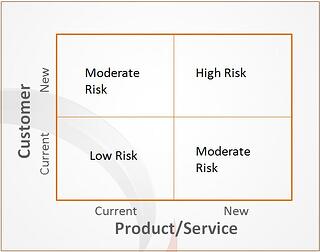
Thu, Nov 15, 2012 — Opportunities Galore… This small company is 15 years old, and has a few million in sales. The founder has returned from semi-retirement to help lead and reinvigorate the team. In the past year or so, the firm introduced a number of innovative new services, including its first consumer-direct offering. It has also partnered with several adjacent industry players and is leading the effort to capture yet another clear opportunity. The small staff works tirelessly to support every new initiative while keeping the wheels on its core offering that delivers 85% of its revenue. While sales overall are not expanding and no one has received a pay increase in years, there are no complaints. These are good people. And they know the power of working nimbly and collaboratively. …But Hungering For Growth Like many of businesses of their size and age, this company hungers for faster, more predictable growth. They are tired of being small when they are part of a market that seems so promising. During our first meeting, it was immediately clear that the company leadership consists of a sharp group of professionals. In our exploratory work session (90 minute complimentary consultation) everyone engaged, all contributing, respectfully listening to new ideas, and adding value to our conversation.

How to Differentiate When You’re Not That Different?
Sun, Nov 11, 2012 — Positioning is a critical step in any business’ marketing strategy. It defines the company, forms the basis for messaging, drives the marketing approach and impacts the way in which products and services are priced. To be effective, positioning must be clear, compelling and, most importantly, differentiated. One of the most common complaints I hear from sales people is that their company’s positioning sounds the same as everyone else they sell against. Their products are “innovative”, their services are “world class”, and they are “customer focused”. These are all examples of buzzwords that marketers use to try polish their position. But spin is not enough. Instead, business leaders need to find or create real differences they can leverage in the market. But how do you differentiate yourself when you’re not that different?