.png?width=1500&height=398&name=CO_Corporate%20Logo%202021_4C_HOR_FNL-1%20(1).png)

The Contrarian Brand Play: Why Right Now Is the Best Time to Invest in Brand
Part 4 of our four-part series on the evolving AI search landscape and what B2B leaders need to know to stay competitive.
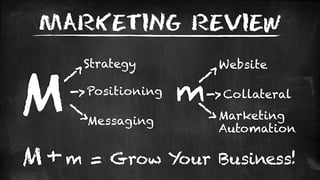
Marketing…the big “M” and the little “m”
Mon, Feb 22, 2016 — When it comes to understanding the function of Marketing, there are often common words that enter the equation like “website”, “brochures”, or “sales collateral”. While these are tools that typically originate from the Marketing department, they only scratch the surface of what Marketing encompasses in total. A wise person once characterized the poorly understood function in the terms of “there is a big 'M' in Marketing and a little 'm'”. Wow, that is profound. So, what do we mean when we say the big “M” of Marketing?

Top 12 (Plus 1) Leadership Skills I Learned from Boy Scouts
Tue, Feb 2, 2016 — Robert Fulgrum reminded us that “All I Really Needed to Know I Learned in Kindergarten” when he published his book of the same name. We’re told that if we: Share Everything Play Fair Don’t Hit People… …along with 13 more basic principles we will surely have a successful life. Well, he didn’t exactly say that, but certainly he asserts our lives would be more peaceful and our society less caustic.
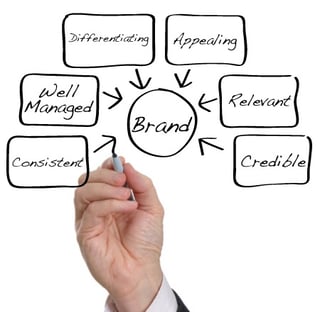
How to Brand the Service Component of your Business
Thu, Jan 28, 2016 — In the two previous posts I discussed the concept of branding a service delivery process and some of the benefits of pursuing this approach. Then I offered some real-life examples of effective service and discovery process brands. In this final installment, I will present steps to guide you as you create your own service process brand. In the simplest terms, it means standardizing and naming an existing process, then promoting it to customers.
Branded Service Processes Create Value and Profits for these Companies
Thu, Jan 21, 2016 — In my previous post, I introduced the concept of branding a service delivery or discovery process and outlined some of the benefits of pursuing this approach. In this installment, I will share some real-life examples of service process branding to give you a better idea of how it works. Below are three examples of branded service delivery. The third is explained in greater detail to more fully illustrate execution of the concept.

Business Plans Gone Bad: Five Ways To Fix Your Focus
Tue, Jan 19, 2016 — At some point in history, when the first caveman took on a business partner for their fledgling wheel manufacturing business, it became necessary for them to complete a business plan. After all, how would our cave-bound friends decide who was responsible for construction, supply chain, sales and marketing and testing? We can only hope that in those simpler times, business planning consisted of a couple of grunts and a handshake. Today, the business planning cycle has taken on a life of its own. Except for the grunts, pretty much the entire process has been transformed into a rigorous set of meetings, a forest’s worth of documentation, and enough headaches to cause a measurable spike in Advil sales in your locality.
Brand Your Service Delivery Process to Grow the Business
Thu, Jan 14, 2016 — In this post and the two that follow, I’m going to share a straightforward approach to increasing profits that most of the companies I encounter fail to exploit. Implementation is within the reach of small and medium sized companies and the potential rewards should grab the attention of CEOs.
Do CMOs Really Matter? Harvard Business Review Says Yes!
Thu, Oct 29, 2015 — The October 2015 issue of Harvard Business Review contains an interesting article that discusses the value that Chief Marketing Officer bring to organizations, Do CMOs Really Matter? The business press and academic studies have questioned the value of having a marketing person as a member of the executive team over the past few decades. As you can imagine, the answers have varied. 66% of CMOs recently surveyed indicated they are continually under pressure to demonstrate the value of marketing.

Why You Should Stop Your PPC Ads Now
Wed, Oct 28, 2015 — A Call to Return to Marketing Basics—for the Good of the Consumer and Lead Gen When I’m interviewing a talented applicant for a marketing position, I’m not only interested in their qualifications and experience, but the value they can add to my company, how creative they are in generating solutions and new ideas and -- just as important -- their knowledge of, or at least their desire to, understand my company’s customers.

Rebooting Your Marketing Strategy to Meet B2B Buyer Expectations
Wed, Oct 21, 2015 — Before the digital marketing boom, sales teams were the hunter-gatherers – the ones that had to go into the forest and slay or harvest what our company would subsist upon. In those days, the typical B2B marketer was asked to sharpen the arrows, restring the bows – and hope that our prep work was good enough to ensure an acceptable bounty. When the sales team shouldered 100 percent of the prospective buyer’s journey, it was up to us to ensure the prospect knew about your company, could call or visit the office for more information, and were loaded down with a highly polished set of sales materials (and telephone script) that hooked them on the notion that yes, we are the definitive answer to their problem.